A comprehensive guide for restaurant owners and managers looking to create the perfect acoustic environment
Introduction
Walk into any successful restaurant in Phuket, and you’ll notice something beyond the food and service—the atmosphere feels just right. The music volume allows conversation without shouting, yet there are no awkward silent zones. This invisible ingredient, professional audio design, can make the difference between guests staying for one drink or three. А professional restaurant sound system Phuket installation can make the difference.
Poor restaurant acoustics create immediate problems. When sound is too loud, customers leave earlier and spend less. When it’s too quiet, the atmosphere feels lifeless. For Phuket’s competitive hospitality market where international tourists expect premium experiences, these issues directly impact revenue and reputation.
This guide covers everything restaurant owners need to know about professional sound system installation in Phuket—from understanding acoustic challenges unique to tropical climates, to selecting the right equipment, to avoiding costly mistakes.
Why Sound Matters For Restaurants
The connection between acoustics and restaurant success is backed by research and industry experience. Studies show that background noise levels directly correlate with guest satisfaction scores. Restaurants with properly designed audio systems see higher average checks, longer table times, and significantly more positive online reviews.
Consider the economics: A 150-seat restaurant turning tables twice per night with an average check of 1,500 THB generates 450,000 THB daily. If poor acoustics drive away just 10% of potential customers—entirely realistic given how often reviews mention noise—that’s 45,000 THB lost per day, or 1,350,000 THB per month. A professional sound system costing 600,000 THB pays for itself in two weeks through improved customer retention alone.
The right background music increases revenue measurably. Tempo affects dining pace—slower music encourages lingering and additional orders, faster tempo increases turnover during busy periods. In Phuket’s tourism-driven market, audio quality serves as a competitive differentiator. International guests accustomed to world-class hospitality notice acoustic comfort immediately.
Online reputation amplifies these effects. Reviews mentioning noise problems appear prominently in search results and directly influence booking decisions. Since most diners check reviews before choosing restaurants, acoustic design directly impacts online visibility and guest acquisition.
Understanding Restaurant Acoustics in Phuket
Common Acoustic Challenges
Modern restaurant design in Phuket often prioritizes aesthetics over acoustics, creating predictable sound problems. Open kitchens introduce constant equipment noise—exhaust fans, blenders, woks on burners. Without proper planning, kitchen sounds dominate the dining area, forcing music volume up and creating a feedback loop of increasing noise.
High ceilings with hard surfaces compound these issues. Marble floors, glass walls showcasing sea views, and minimal soft furnishings create highly reflective acoustic environments. Sound waves bounce repeatedly before dissipating, causing reverberation that makes speech unintelligible and music muddy.
Glass walls present particular challenges. While offering stunning ocean views—a key selling point for Phuket restaurants—glass reflects sound efficiently, creating standing waves and hot spots. Many Phuket restaurants feature both air-conditioned indoor spaces and open-air terraces requiring separate audio control—outdoor areas need higher volume to overcome ambient noise, while indoor spaces require subtle reinforcement.
Phuket-Specific Factors
Phuket’s tropical climate introduces technical challenges absent in temperate regions. Humidity levels regularly exceed 80%, accelerating corrosion of electronic components and speaker drivers. Standard indoor equipment fails within months when exposed to salt air near beaches. Professional installation requires humidity-resistant components and stainless steel hardware.
Rain creates unique acoustic problems. Sudden downpours generate 70-80 dB of ambient noise, drowning out normal music levels. Systems must include automatic volume adjustment or managers spend entire shifts compensating manually. Outdoor speakers require IP66 or higher weatherproofing ratings—genuinely sealed against tropical storms.
Air conditioning noise competes directly with foreground music, generating 55-65 dB of background noise and forcing music volume up. Multiple zones with distinct acoustic requirements demand sophisticated control—a typical Phuket restaurant might include indoor fine dining, bar area, outdoor terrace, and private dining rooms, each needing independent control yet seamless transitions.
Acoustic Treatment Basics
Professional audio installation addresses both sound reinforcement (speakers and electronics) and acoustic treatment (physical space modification). Treatment absorbs or diffuses sound waves, controlling reverberation time and eliminating problematic reflections. Without treatment, even the finest speakers produce muddy, tiring sound.
Fabric-wrapped acoustic panels, decorative wood slats with absorptive backing, and acoustic ceiling tiles convert sound energy to heat through friction. Modern acoustic panels come in designer finishes matching restaurant aesthetics. Budget-friendly solutions include heavy drapes, upholstered seating, and suspended ceiling baffles costing 50,000-100,000 THB but delivering dramatic improvement.
The key principle: You cannot equalize away acoustic problems. Professional designers address acoustic fundamentals first, then tune electronics to optimize the treated space.
System Components Explained
Speakers
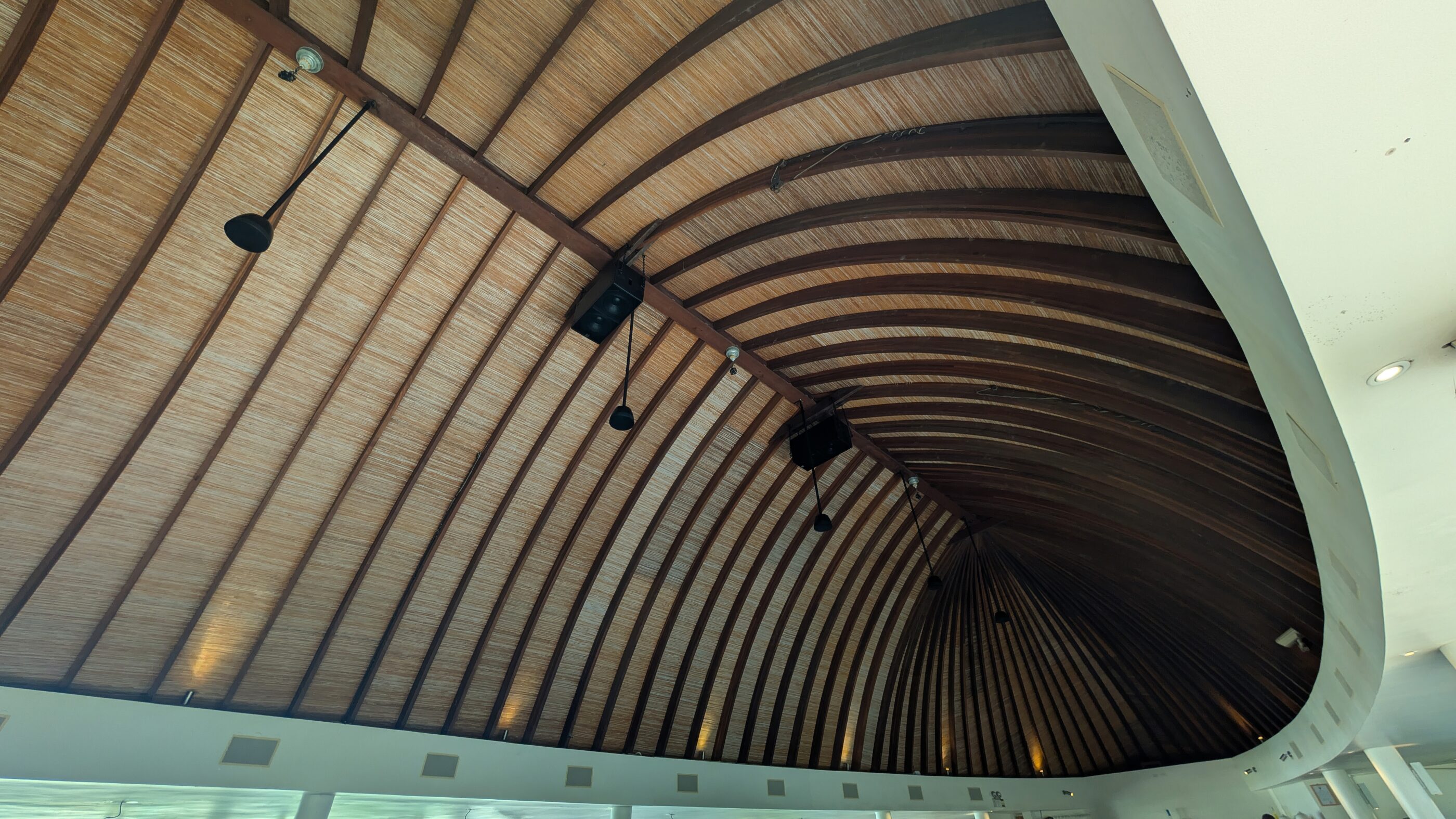
Ceiling speakers provide distributed audio coverage ideal for background music. Mounted flush with ceiling, they deliver even volume without visual clutter. Professional systems use 6-8 ceiling speakers per 100 square meters, placed strategically to avoid dead zones and hot spots.
Wall-mounted speakers offer directional control for long narrow spaces or areas requiring focused coverage. Outdoor weather-resistant speakers must withstand Phuket’s harsh coastal environment—true marine-grade speakers feature sealed enclosures, UV-resistant materials, and stainless steel grilles. The price premium (2-3x compared to indoor speakers) pays off through longevity—quality outdoor speakers last 5-7 years in tropical conditions versus months for cheap units.
Subwoofers add low-frequency impact but require careful consideration. Poorly integrated subwoofers create boomy, overwhelming sound. Many upscale restaurants skip subwoofers entirely, accepting reduced bass extension for refined, non-intrusive sound.
Amplifiers & Processors
Multi-channel amplifiers power distributed speaker systems efficiently. Modern Class-D amplifiers deliver high power with minimal heat generation. Digital Signal Processors (DSPs) handle routing, equalization, time alignment, and level control, allowing precise tuning for room acoustics.
Multi-zone capability separates professional installations from amateur systems. (See: Dante audio networking engineering guide for multi-building resorts.) Each zone gets independent source selection, volume control, and EQ settings. Managers might play jazz in the dining room, upbeat pop in the bar, and lounge music on the terrace—simultaneously, from one integrated system.
Control Systems
Modern restaurant audio systems offer intuitive control via tablets or smartphones. Preset scenes simplify operations—”Breakfast” preset activates gentle acoustic music at moderate volume, “Dinner” switches to contemporary tracks with adjusted EQ. Volume automation by time maintains target sound levels throughout service without gradual volume creep.
Wireless microphones enable speeches and presentations. Professional systems include automatic microphone mixing—when someone speaks, music volume ducks intelligently, then returns when the microphone deactivates.
Design Considerations
Venue Assessment
Professional design begins with detailed site survey measuring room dimensions, ceiling heights, materials, and background noise levels. Venue size directly determines system complexity—a small 50-seat cafe needs 6-8 ceiling speakers and simple two-zone system, while a 200-seat restaurant with multiple areas requires 25+ speakers across 5+ zones.
Layout and traffic flow inform speaker placement. Open kitchens dictate strategic positioning to minimize sound spill. Existing noise sources from kitchen equipment, HVAC systems, and neighboring businesses all contribute to baseline noise levels the system must overcome.
Zone Planning
Effective multi-zone systems divide restaurants into acoustically and functionally distinct areas. Indoor dining requires speech intelligibility at 70 dB background music levels. Bar areas tolerate higher volume (75-80 dB) creating energy. Outdoor terraces need 80-85 dB to overcome ambient noise from traffic, waves, and neighboring venues.
During normal operations, all zones play coordinated background music. When private dining rooms host events, those zones switch to dedicated control—microphones, presentations, higher volumes—without affecting other areas.
Budget Ranges
Restaurant audio system costs vary based on venue size, complexity, and equipment quality:
Small Venue (50-100 seats): 350,000-500,000 THB
- 8-12 ceiling speakers
- Basic 2-3 zone control
- Standard amplification
- Tablet control interface
Medium Venue (100-200 seats): 500,000-800,000 THB
- 15-20 speakers (indoor + weather-resistant outdoor)
- 3-4 zone control with DSP
- Streaming integration
- Basic acoustic treatment
Large Venue (200+ seats): 800,000-1,500,000+ THB
- 25+ speakers across 5+ zones
- Sophisticated DSP and automation
- Wireless microphones
- Comprehensive acoustic treatment
Acoustic treatment adds 15-30% to total budget but dramatically improves results. Installation complexity, equipment tier selection, and brand choice significantly affect final costs. Premium brands (Bose, JBL Professional) command higher prices but deliver known performance and reliability.
3D Acoustic Modeling
Advanced projects utilize 3D acoustic modeling software predicting system performance before installation. Software calculates coverage patterns, frequency response, and sound pressure levels throughout the space. This visualization reveals dead zones and hot spots during planning rather than after installation. The modeling investment (30,000-50,000 THB) prevents costly redesigns.
Installation Process
Site Survey (1 day)
Installation teams photograph every area, measure critical dimensions, and note structural elements. Acoustic measurements establish baseline noise levels. Discussions clarify functional requirements, aesthetic preferences, and operational constraints. Existing infrastructure assessment determines whether electrical service supports proposed systems.
Design & Proposal (3-5 days)
Engineering teams design systems matching surveyed conditions. Detailed proposals itemize equipment, labor, and acoustic treatment. Technical drawings show speaker locations and cable routes. For complex projects, 3D acoustic modeling generates predictive visualizations.
Installation (1-2 weeks)
Cable installation runs speaker wires, control cables, and network connections through ceilings, walls, and conduits using plenum-rated cables meeting fire codes. Speaker mounting requires cutting precise holes and securing brackets to structural elements. Equipment racks centralize amplifiers, processors, and source equipment in accessible locations.
System integration verifies every component functions correctly. Engineers configure DSP parameters, tune equalizers for room acoustics, and program control interfaces.
Calibration & Training (1 day)
Final calibration optimizes system performance using measurement microphones and analysis software. Engineers tune frequency response, adjust speaker delays, and set appropriate limiters. Staff training covers volume adjustment, source selection, and basic troubleshooting. System documentation includes technical drawings, equipment manuals, and warranty information.
Common Mistakes to Avoid
Under-Powering the System: Budget constraints tempt venues to reduce speaker counts or amplifier power. Under-powered systems operate near maximum capacity producing distorted sound. Proper amplifier headroom (30-50% beyond normal levels) ensures clean sound while protecting equipment.
Wrong Speaker Placement: Amateur installations position speakers based on convenience rather than acoustic requirements, creating dead zones and hot spots. Professional placement uses acoustic modeling for even coverage and smooth transitions between speakers.
No Multi-Zone Control: Single-zone systems force entire venues to operate at one volume level. Multi-zone capability costs 10-15% additional but delivers enormous operational flexibility through independent zone control.
Skipping Acoustic Treatment: No speaker system can eliminate excessive reverberation through electronic correction alone. Strategic acoustic treatment (100,000-250,000 THB) combines with speaker systems delivering results exceeding either approach alone.
Not Weatherproofing Outdoor Equipment: Phuket’s coastal environment destroys inadequate equipment rapidly. Genuine weatherproof speakers cost 2-3x more but last years longer. IP66/IP67 ratings and stainless steel hardware resist tropical conditions.
Choosing Based Only on Price: The lowest quote rarely delivers best value. Professional installations cost more upfront but deliver appropriate solutions, quality equipment, proper installation, and reliable support. Budget systems require replacement within 2-3 years, ultimately costing more.
Maintenance & Long-Term Operation
Professional restaurant audio systems require minimal maintenance when properly installed. Quarterly inspections check connections, clean outdoor speaker grilles, verify DSP settings, and update streaming credentials. Monthly hosing removes salt and dirt from outdoor speakers. Annual inspection identifies corrosion before failures occur.
Software updates for DSPs, streaming integrations, and control systems improve functionality. Professional service contracts (30,000-60,000 THB annually) provide priority support, preventive maintenance, and remote monitoring, minimizing downtime.
System upgrades follow technological advancement. After 5-7 years, equipment obsolescence might justify modernization. However, properly designed systems support incremental upgrades—adding zones, updating processors, replacing worn speakers—without complete replacement.
Why Choose Professional Installation
Professional restaurant audio installation differs fundamentally from hiring “a sound guy.” The engineering approach begins with acoustic analysis and detailed design rather than guessing equipment needs. Multi-brand expertise allows proper equipment selection matching requirements and budgets rather than forcing single-manufacturer solutions.
Comprehensive warranties protect investments through manufacturer coverage (2-5 years) plus installer workmanship guarantees. Compliance with safety standards and building codes ensures legal operation and insurance coverage. Return on investment through optimal design justifies professional installation costs—well-designed systems create comfortable guest experiences encouraging longer stays and repeat visits.
Clubtek Thailand brings engineering expertise, multi-brand knowledge, and extensive experience (100+ completed projects) to restaurant audio installation throughout Phuket. Our approach combines acoustic analysis, professional-grade equipment from brands like Martin Audio, Bose, d&b audiotechnik, and comprehensive support ensuring long-term success.
Ready to Transform Your Restaurant’s Audio Experience?
Professional sound system design creates the invisible atmosphere that keeps guests comfortable, encourages longer visits, and generates positive reviews. Whether you’re planning a new restaurant or upgrading an existing venue, investing in proper audio installation delivers measurable returns through improved guest satisfaction and operational efficiency.
Contact Clubtek Thailand for a professional consultation:
📱 WhatsApp: +66 95 428 8420
🌐 Website: clubtek-th.com
Our team provides free site surveys, detailed proposals, and 3D acoustic modeling for complex projects. Let us show you how professional audio installation transforms your restaurant’s guest experience.
Related Audio Guides for Phuket Hospitality Venues
Restaurant audio is one of several venue categories where the right sound system shapes guest experience. Read our companion guides on nightclub sound system installation, hotel multi-zone audio, beach club sound engineering, and rooftop bar audio in Phuket. Lighting plays an equally critical role — see our guide to 5 costly restaurant lighting mistakes hurting Thailand venues. For Phuket-specific service, visit our audio systems Phuket installation page or explore the Mirage Indigo rooftop restaurant case study.