Engineering professional sound systems for coastal and open-air venues in Thailand
Introduction
Beach clubs face audio challenges unlike any other venue type. The perfect system for an indoor nightclub fails spectacularly when saltwater spray hits the tweeters. (See: nightclub sound system cost guide.) Restaurant audio design principles collapse when wind carries sound away from guests. Standard outdoor speakers corrode within months under Thailand’s sun and humidity. A beachclub requires a professional beach club audio system in Thailand engineered for open-air tropical environments.
Phuket’s beach club market is booming. From Patong’s energetic party venues to the sophisticated lounges of Bang Tao and Surin, coastal venues require audio systems engineered specifically for open-air tropical environments.
At Clubtek, we’ve installed professional audio systems for beach clubs across Thailand — from Nikki Beach Resort Samui to Yuuhi Beach Club Phuket and beyond. Two decades of coastal installations have taught us what survives, what fails, and how to engineer systems that perform reliably in Thailand’s harshest acoustic environments. (See: venue acoustic treatment engineering for Thai nightclubs and bars.)
Why Beach Club Audio System Design Is Different
The Coastal Challenge
Indoor venues benefit from walls that reflect sound, create boundaries, and protect equipment. Beach clubs have none of these advantages.
Open-air acoustics follow different physical rules. Sound dissipates rapidly without reflective surfaces. A speaker covering 30 meters indoors may only reach 15 meters outdoors before wind and ambient noise destroy intelligibility.
Environmental factors quickly destroy standard audio equipment:
- Saltwater spray corrodes metal components within weeks
- UV radiation degrades plastic housings and cable insulation
- Sand infiltrates speaker grills and ventilation ports
- Humidity causes internal condensation and short circuits
- Heat buildup damages amplifiers and power supplies
- Wind creates both acoustic interference and physical stress
Ambient noise levels fluctuate constantly:
- Ocean waves: 50–65 dB baseline
- Wind through vegetation: 45–60 dB
- Crowd conversation: 70–80 dB
- Day vs night variation: up to 15 dB
A beach club system must overcome these variables while delivering consistent sound from daytime pool sessions to nighttime DJ events.
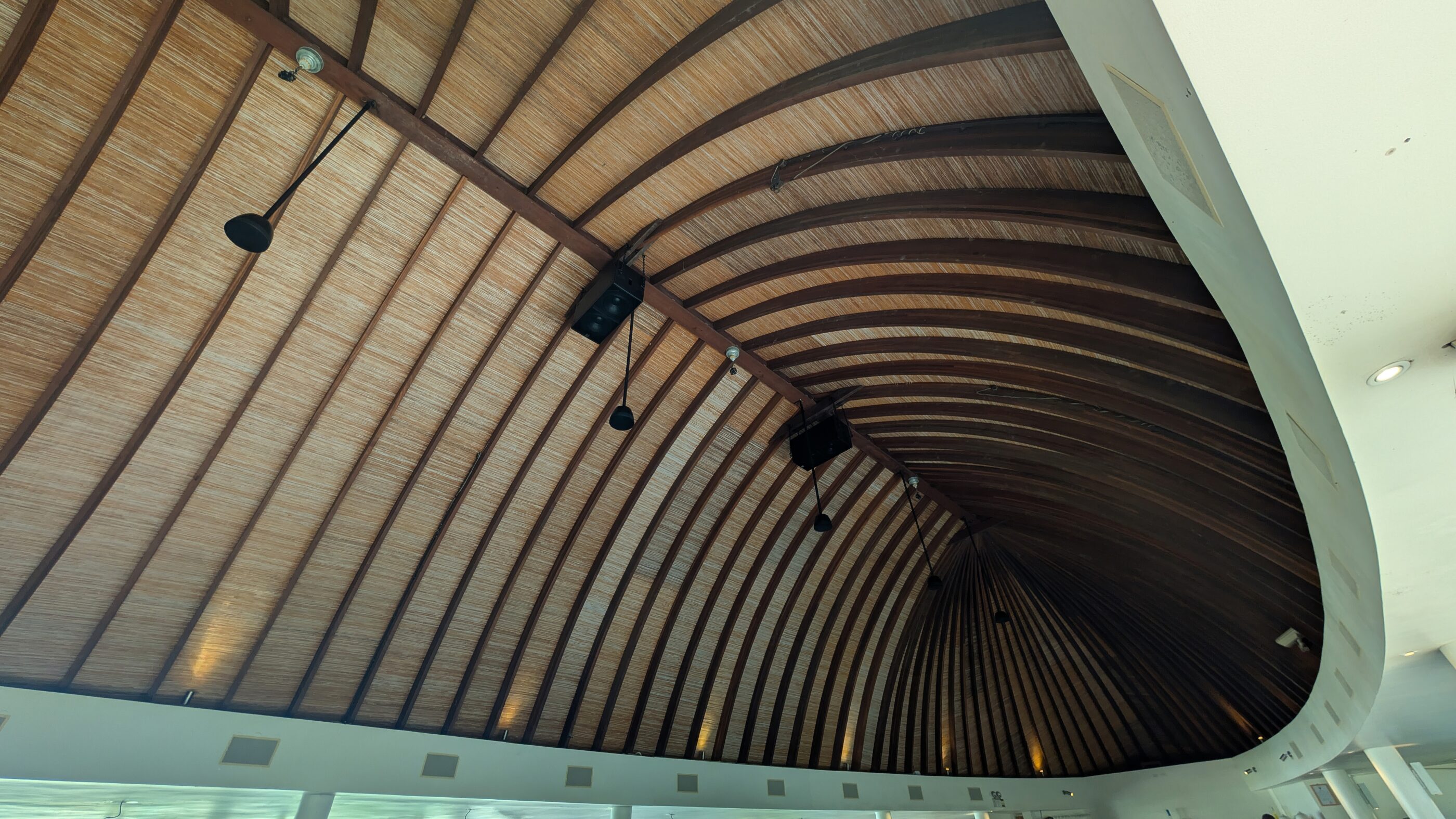
professional restaurant sound systems in Phuket
Technical Requirements for Coastal Installations
Environmental Protection Standards
IP (Ingress Protection) ratings are not optional in coastal environments.
Standard indoor speakers rated IP20 fail immediately outdoors.
Minimum requirements for beach clubs:
- Speakers: IP65 minimum
- Amplifiers: IP54 (installed in protected enclosures)
- Cables: Marine-grade, UV-resistant
- Mounting hardware: Stainless steel 316
We regularly see venues install IP44 “outdoor” speakers believing they are sufficient. Within six months the result is corroded voice coils, failed tweeters, and complete system replacement. The initial 40% savings typically turn into 200% losses.
At Nikki Beach Resort Samui, we specified full marine-grade systems. Three years later there are zero corrosion issues despite daily salt exposure.
Acoustic Design for Open Spaces
Indoor acoustics manage reflections. Outdoor acoustics manage loss.
Without boundaries, the inverse square law applies aggressively. Sound level drops 6 dB with every distance doubling, with no reflective compensation. Wind direction, temperature gradients, and changing atmospheric conditions further alter coverage.
For this reason, distributed speaker systems outperform centralized PA stacks in beach club environments.
Distributed designs provide:
- More consistent SPL across the venue
- Better resistance to wind effects
- Redundancy and fault tolerance
- Lower per-speaker stress
- Natural sound imaging
Traditional line arrays are rarely ideal for beaches. Their long-throw behavior creates extreme level differences between near and far listeners, making them unsuitable for relaxed, evenly distributed environments.
At Yuuhi Beach Club Phuket, a 12-zone distributed system replaced two centralized stacks. Result: ±2 dB variance across the venue instead of ±8 dB previously.
Power Infrastructure and Safety
Beach club audio demands electrical engineering equal to acoustic design.
Requirements include:
- GFCI protection near all water zones
- Dedicated audio power circuits
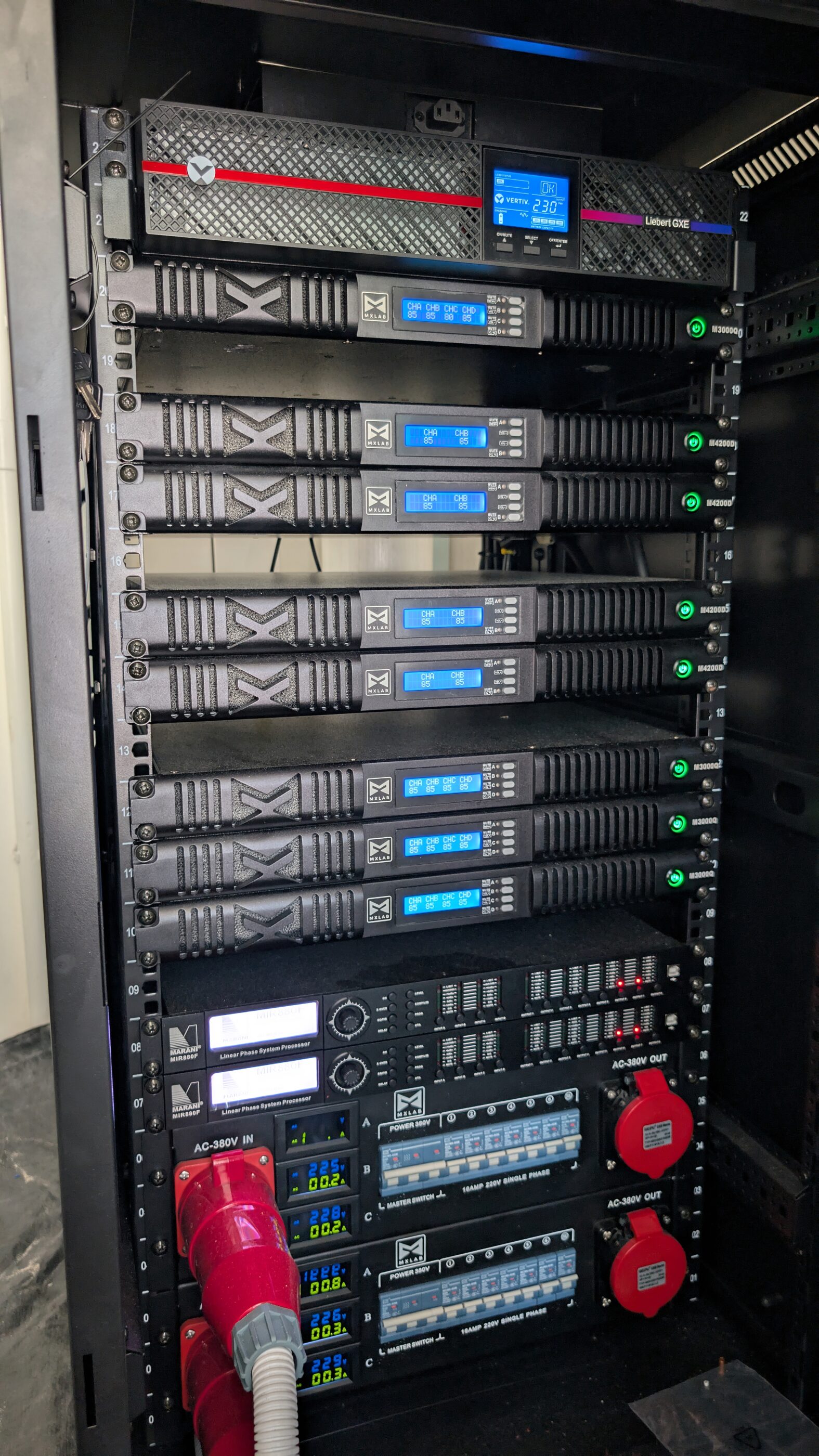
- Power conditioning and surge protection
- Climate-controlled amplifier rooms
- Proper grounding solutions for sandy environments
Sand provides poor electrical grounding. Achieving safe resistance values often requires deep ground rods or chemical grounding solutions. This is not a DIY domain.
System Design Strategy
Zone Architecture
Beach clubs consist of multiple acoustic environments requiring independent control.
Typical zones include:
- Beach and pool areas
- Restaurant and dining spaces
- Bar zones
- VIP cabanas
- DJ and performance areas
- Pathways and transition zones
Modern installations require networked audio systems with DSP control, allowing time-based automation, zone-specific playlists, and staff operation via tablets or mobile devices.
Equipment Selection
Not all “outdoor speakers” survive coastal environments.
We classify systems as:
- Weather-resistant: 2–3 year lifespan
- Marine-grade: 5–10+ year lifespan
Marine-grade systems cost 40–60% more initially but reduce replacement costs by 300–400% over time.
We specify brands with proven coastal performance including MX LAB, d&b audiotechnik, Martin Audio, L-Acoustics, and JBL Professional.
Subwoofer design is critical near water, where low frequencies travel further. Cardioid configurations and processing are essential for neighbor noise control.
Installation Methodology
Site Survey and 3D Modeling
Every project begins with environmental assessment and 3D acoustic modeling.
Deliverables include:
- SPL prediction maps
- Speaker quantity optimization
- Wind-affected coverage simulations
- Identification of problem zones
Accurate modeling often reduces equipment count while improving coverage consistency.
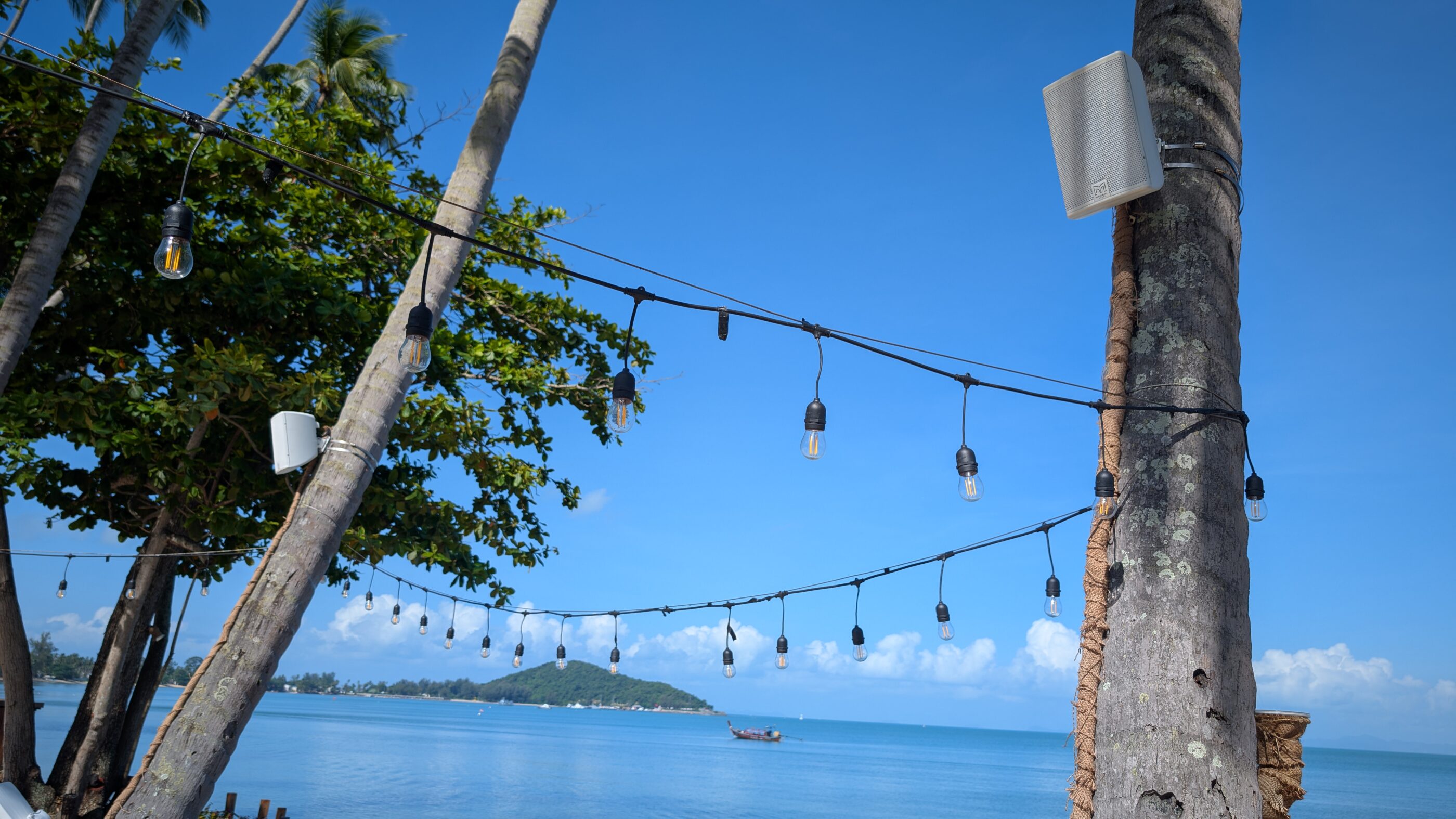
Installation Best Practices
Proper mounting, sealed cabling, UV-protected conduit, and corrosion-resistant hardware determine system longevity. Testing includes multi-location SPL verification, wind condition checks, and full-weather commissioning.
Maintenance and Longevity
Beach club systems require active maintenance.
Without maintenance, systems fail within 3–5 years. With proper care, lifespan extends to 10–15 years.
Annual maintenance cost averages 2–4% of system value — a fraction of replacement cost.
Investment Expectations
Typical Budget Ranges
- Small beach bars: 600,000–1,500,000 THB
- Medium beach clubs: 1,200,000–3,500,000 THB
- Large venues: 2,500,000–8,000,000+ THB
Professional systems routinely achieve ROI within a single season through increased dwell time, event capability, and guest satisfaction.
Conclusion
Beach club audio is not a variation of indoor sound design. It is a distinct engineering discipline requiring marine-grade equipment, distributed architectures, and environmental modeling.
Venues that invest correctly once outperform those that rebuild repeatedly.
Ready for Professional Beach Club Audio Engineering?
Clubtek Thailand provides coastal-specific audio design, 3D modeling, marine-grade specification, and long-term support across Phuket, Samui, and Thailand.
Contact Clubtek Thailand:
📱 WhatsApp: +66 95 428 8420
🌐 Website: clubtek-th.com
Related Coastal Audio Guides for Thailand Venues
Beach club sound design overlaps with several adjacent venue categories. See our companion guides on nightclub sound system installation, restaurant sound system design, rooftop bar audio in Phuket, and hotel and resort multi-zone audio. Speaker technology choices are covered in our line array vs point source comparison — relevant for any large open-air venue. For Phuket and Samui projects specifically, see audio systems Phuket, audio systems Koh Samui, and the Nikki Beach 5-star resort Samui case study.
Related coverage
For Phangan’s beach club and event venues, see our guide on Koh Phangan beach venue audio. For Samui beach resort installations, see our guide on Koh Samui beachfront audio.