Technical comparison guide for selecting appropriate speaker systems
Introduction
Walk into professional audio consultations and one question dominates: line array or point source speakers? This fundamental choice affects system performance, budget, and long-term satisfaction more than any other decision. Yet many venue operators struggle understanding the real differences beyond marketing claims and dealer recommendations. (See: nightclub sound system cost guide for Thailand venues.) Both technologies deliver quality sound when properly implemented, but each excels in specific applications while proving inadequate for others.
Choosing professional speakers Thailand venues need requires understanding. The confusion stems partly from evolving technology. Modern compact line arrays blur traditional distinctions, while advanced point source systems incorporate features once exclusive to arrays. Marketing materials emphasize advantages while downplaying limitations. Dealers sometimes recommend familiar products rather than optimal solutions. This technical comparison cuts through confusion, explaining how each technology actually works, when each excels, and how to choose appropriately for specific venue requirements.
Understanding these differences matters financially and operationally. Line array systems typically cost 40-60% more than equivalent point source installations. Choosing inappropriately wastes substantial investment delivering mediocre results. Conversely, selecting the right technology for specific applications optimizes performance within budget constraints. This guide provides decision frameworks enabling informed choices based on actual venue requirements rather than assumptions or sales pressure.
Line Array Technology Explained
How Line Arrays Work
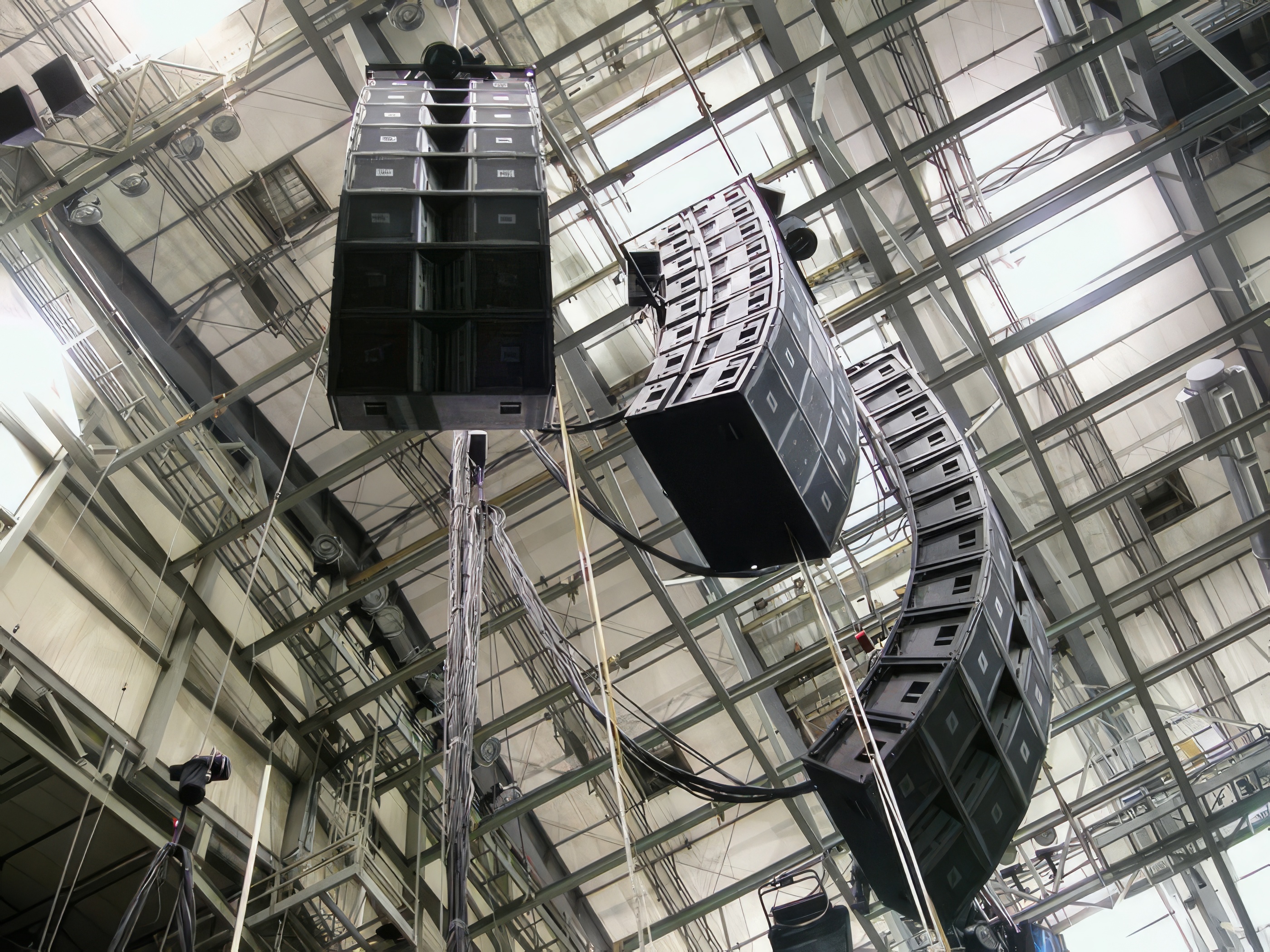
Line array speakers arrange multiple identical enclosures vertically in a straight or curved line. This physical arrangement creates coherent wavefronts through acoustic coupling—sound from individual elements combines constructively, functioning as single large source rather than multiple separate speakers. (See: acoustic treatment requirements for Thai concrete-shell nightclubs.) The physics underlying this coupling determines line array behavior and advantages.
Vertical arrangement controls vertical dispersion precisely while maintaining wide horizontal coverage. Each enclosure includes internal aiming mechanisms (mechanical or electronic) directing sound toward specific audience areas. When properly configured, arrays create even sound distribution from front to back of venues, overcoming the natural tendency for level to decrease dramatically with distance.
The key principle: wavefront coherence. Traditional point source arrangements create interference patterns as sound from different speakers arrives at listening positions with varying time delays. Line arrays minimize these interactions through precise physical and electrical alignment. Modern arrays include sophisticated DSP calculating exact delays and signal processing maintaining coherence across wide frequency ranges.
Acoustic coupling provides another critical advantage. Low and mid frequencies from multiple drivers combine efficiently, delivering substantially more output than individual elements operating independently. A twelve-element array might deliver 6-9 dB more output than single enclosure—dramatic improvement requiring only modest amplifier power increase. This efficiency advantage proves especially valuable for venues requiring high SPL over large areas.
Line Array Advantages
Coverage uniformity represents the primary line array benefit. Traditional speaker systems suffer from hot spots near speakers and dead zones distant from coverage. Line arrays maintain consistent level and tonal balance throughout intended coverage areas. Front row seats receive similar level as rear positions, eliminating complaints about excessive volume near speakers or inadequate level elsewhere.
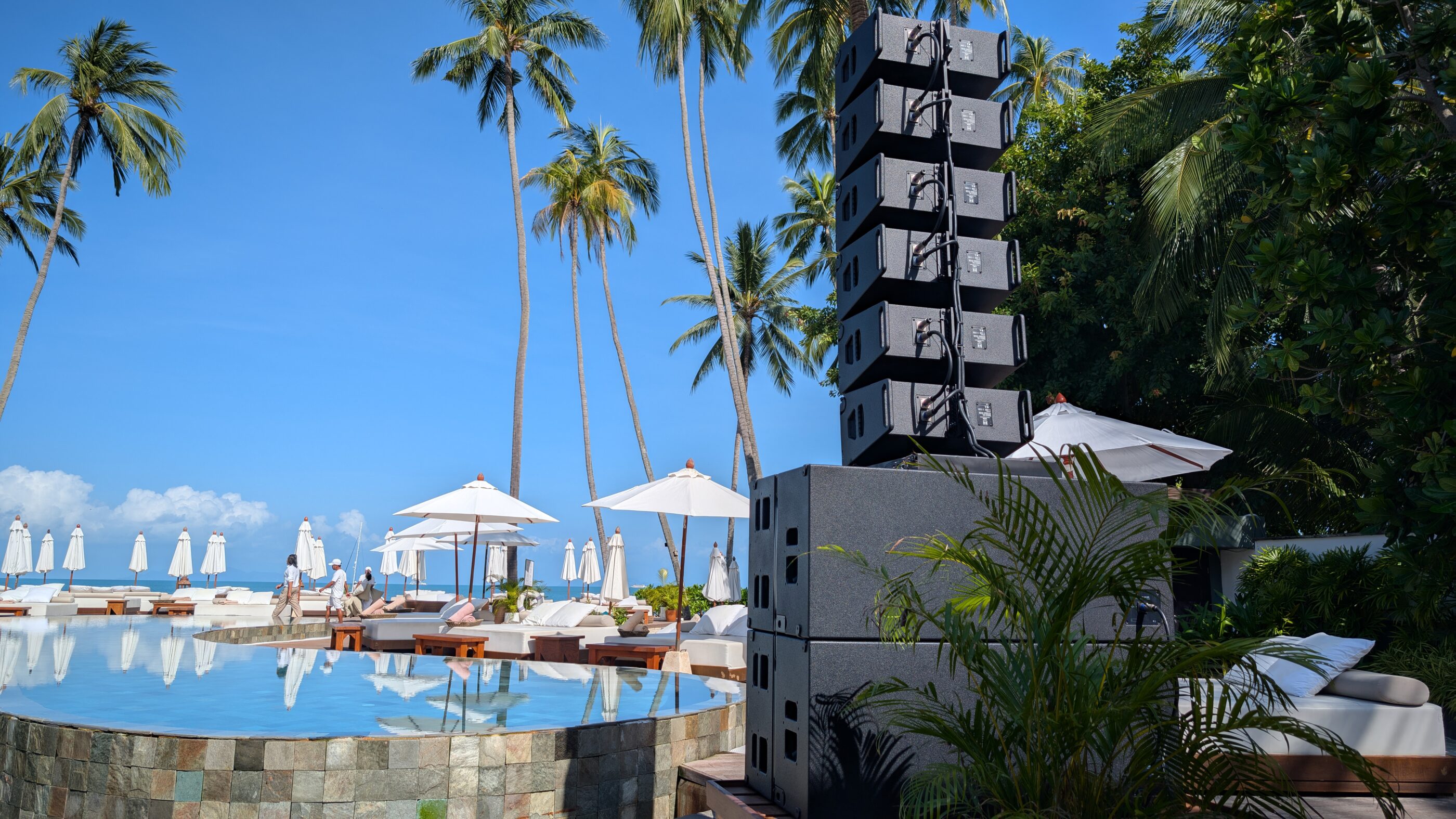
Directional control enables installations in acoustically challenging spaces. Tight vertical dispersion keeps energy on audiences rather than exciting ceilings and creating excessive reverberation. This control proves valuable in high-ceiling venues, outdoor installations avoiding sound propagation to neighbors, and spaces with problematic reflective surfaces. Some arrays achieve rear rejection reducing energy behind systems—useful for controlling stage volume in live performance venues.
Scalability accommodates varying venue sizes through modular design. Small venues might deploy six elements per side while large installations use twenty or more. The same speaker model scales from intimate clubs to concert halls, allowing organizations to standardize on single platform across multiple facilities. This standardization simplifies inventory, training, and spare parts management.
Visual impact suits modern aesthetic preferences. Sleek arrays hanging unobtrusively from ceilings create clean appearances compared to multiple visible point source speakers throughout spaces. Some venues value this aesthetic integration highly, viewing audio systems as architectural elements requiring design consideration beyond pure functionality.
Line Array Limitations
Cost represents the most significant limitation. Line arrays require substantial initial investment—professional systems start around 800,000 THB for small installations, reaching 3,000,000+ THB for medium venues. This premium reflects sophisticated engineering, precision manufacturing, and included DSP systems. Budget-constrained projects often cannot justify expense regardless of performance advantages.
Complexity demands professional installation and setup. Arrays require precise aiming, delay alignment, and system optimization using measurement equipment and analysis software. Improper configuration defeats performance advantages, potentially delivering results worse than simpler alternatives. Ongoing maintenance and adjustments need qualified technicians rather than general staff, increasing operational costs.
Minimum distance requirements limit applications. Line arrays need adequate throw distance (typically 4-6 meters minimum) developing proper acoustic coupling. Venues with audiences very close to speakers cannot fully utilize array advantages. Small rooms, low ceilings, or specific architectural constraints may physically prevent appropriate array deployment.
Rigging and structural requirements add installation cost and complexity. Arrays impose significant loads on mounting points—a full system might weigh 400-600 kg per side. Professional rigging engineering ensures structural adequacy and safety. Existing venues may lack appropriate mounting points, requiring costly structural modifications. Some buildings cannot support required loads regardless of modifications.
Point Source Technology Explained
How Point Source Systems Work
Point source speakers radiate sound from relatively compact locations. Each enclosure operates independently rather than coupling with adjacent units. Coverage patterns depend on individual driver arrangements and horn designs within each cabinet. Traditional two-way and three-way speaker designs exemplify point source architecture.
The term “point source” describes acoustic behavior rather than literal geometry. Sound appears to originate from a single point relative to listening distances. This behavior enables simplified system design calculations using standard geometric spreading formulas. Level decreases 6 dB per distance doubling under ideal conditions—predictable behavior simplifying coverage planning.
Modern point source systems achieve sophisticated performance through advanced driver and horn technology. Constant directivity horns maintain consistent coverage patterns across wide frequency ranges. Coaxial drivers align multiple frequency bands temporally. Waveguide designs control dispersion precisely. These innovations narrow performance gaps between point source and line array technologies in specific applications.
Distributed systems deploy multiple point source speakers throughout spaces rather than concentrating output in few locations. This approach provides even coverage in acoustically difficult environments, allows flexible speaker placement accommodating architectural constraints, and enables independent zones within larger facilities. Many commercial installations favor distributed architectures despite technological alternatives.
Point Source Advantages
Simplicity enables easier installation and configuration. Point source systems require less sophisticated setup than arrays. Installers position speakers, aim appropriately, apply basic EQ, and verify coverage. While professional optimization improves results, basic functionality emerges without extensive measurement and DSP programming. This accessibility reduces installation costs and enables faster deployment.
Cost efficiency proves compelling for budget-conscious projects. Quality point source systems deliver professional performance at substantially lower investment than line arrays. A medium venue might spend 400,000-800,000 THB on point source installation versus 1,200,000-2,000,000 THB for line array equivalent. This 2-3x cost difference significantly affects project feasibility and ROI calculations.
Flexibility accommodates diverse applications. Point source speakers work effectively in small rooms, low-ceiling spaces, and architectures preventing line array deployment. Distributed systems adapt to unusual room shapes, provide multi-zone coverage, and enable incremental expansion. This versatility makes point source technology appropriate for wider range of venues than arrays.
Near-field performance excels in applications requiring speaker placement close to audiences. Point source systems deliver full frequency response and proper coverage at short distances. Applications like small theaters, intimate music venues, and spaces with low ceilings often favor point source designs for this reason.
Point Source Limitations
Coverage uniformity challenges persist despite technological advances. Point source systems inherently create hot spots near speakers and reduced levels at distance. Multiple speakers create potential interference zones where sound from different units arrives with problematic phase relationships. Achieving even coverage throughout large spaces requires careful planning and often compromises.
Output limitations affect high-SPL applications. While quality point source systems achieve substantial levels, matching line array efficiency at large-venue scale requires many speakers and corresponding amplification. The multiple-unit approach increases cost and complexity partially negating initial price advantages. Very high output requirements favor line array efficiency.
Visual appearance sometimes disappoints in applications valuing aesthetics. Distributed systems require numerous visible speakers throughout spaces. While some installations embrace industrial aesthetics incorporating exposed equipment, others view visible speakers as visual pollution contradicting architectural intentions. Line arrays’ simpler visual presence suits these aesthetic-focused projects better.
Directional control limitations affect some installations. Point source speakers radiate energy in all directions within coverage patterns. Controlling where sound goes (and doesn’t go) proves more difficult than with line arrays. Applications requiring tight directional control—like outdoor venues near neighbors or spaces with specific acoustic dead zones—may favor array technology.
Technical Comparison
Coverage Patterns and Throw Distance
Line arrays excel at long-throw applications. Properly configured arrays maintain level consistency over 30-40 meter distances. The coherent wavefront and acoustic coupling deliver uniform coverage from 5 meters to 35+ meters—essential for large venues. Point source systems struggle matching this consistency, typically showing 12-15 dB level variation over similar distances.
However, point source wins short-throw scenarios. Applications requiring speaker placement 2-4 meters from audiences favor point source designs. Arrays need adequate distance developing proper coupling; too-close placement defeats advantages while potentially creating tonal problems. Many small-to-medium venues fall into this distance range making point source natural choice.
Horizontal coverage behaves similarly for both technologies. Modern designs achieve 90-120 degree horizontal patterns controlling energy dispersion. The primary difference manifests in vertical plane where line array design enables precise control unavailable with point source systems.
Sound Pressure Level Capability
Line array efficiency advantages become pronounced at high output levels. A twelve-element array might deliver 130+ dB SPL at 10 meters using moderate amplifier power. Matching this output with point source requires multiple speakers and substantial amplification. For applications demanding high levels—nightclubs, concert venues, large outdoor festivals—line arrays prove more cost-effective despite higher initial equipment investment.
Mid-level applications (100-110 dB SPL) see less dramatic differences. Quality point source systems achieve these levels efficiently. The choice depends more on coverage requirements and budget constraints than pure output capability. Many installations operate comfortably within point source capabilities without sacrificing performance.
Frequency Response and Intelligibility
Well-designed systems of either technology achieve excellent frequency response and speech intelligibility. The implementation quality matters more than fundamental architecture. However, line arrays’ controlled directivity and reduced ceiling/floor reflections often improve intelligibility in reverberant spaces. Point source systems might require more extensive acoustic treatment achieving similar results.
Low frequency reproduction follows different patterns. Arrays couple efficiently at low frequencies delivering substantial bass output. Point source systems typically require dedicated subwoofers supplementing mid-high cabinets. This difference affects system design and budgets but doesn’t necessarily favor either technology—appropriate subwoofer integration delivers excellent results with point source designs.
Application Guidelines
When Line Arrays Excel
Large Venues (500+ capacity): Spaces requiring coverage beyond 15-20 meters benefit from line array throw capability. Conference centers, concert halls, large nightclubs, and outdoor festival stages typically favor array technology. The even coverage and high output capability justify investment.
High-Ceiling Spaces: Venues with ceilings above 6-8 meters benefit from line array vertical control. Energy directed toward audiences rather than ceilings reduces reverberation and improves intelligibility. Warehouses converted to event spaces, modern churches, and large multipurpose facilities often choose arrays for this reason.
Outdoor Installations: Line array directional control proves valuable outdoors. Tight patterns keep energy on audience areas rather than propagating to neighbors. Beach clubs, rooftop venues, and outdoor performance spaces in urban areas favor arrays managing noise complaints while maintaining required output.
Aesthetic-Focused Projects: Venues prioritizing clean visual appearance appreciate line array simplicity. Two sleek arrays hanging discretely deliver full coverage without numerous visible speakers throughout space. High-end restaurants, luxury hotels, and architecturally significant spaces often prefer this approach.
When Point Source Fits Better
Small to Medium Venues (under 300 capacity): Spaces with throw distances under 15 meters rarely justify line array investment. Point source systems deliver equivalent performance at substantially lower cost. Most restaurants, bars, small theaters, and retail stores fall into this category.
Low-Ceiling Environments: Spaces with ceilings under 4-5 meters lack adequate array deployment distance. Point source speakers mounted appropriately provide better coverage. Many commercial installations face this constraint making point source the practical choice.
Budget-Constrained Projects: Organizations with limited budgets achieve professional results with quality point source systems. Rather than compromising on line array quality purchasing inadequate equipment, investing in appropriate point source technology delivers satisfaction within financial constraints.
Distributed Multi-Zone Systems: Facilities requiring independent control of many zones favor point source approaches. Hotels, fitness centers, shopping centers, and similar applications use distributed systems providing flexibility impossible with centralized arrays. The architectural advantages outweigh any performance compromises.
Near-Field Applications: Environments with audiences very close to speakers (2-4 meters) suit point source designs. Small music venues, intimate theaters, and compact presentation spaces work better with properly positioned point source speakers than arrays lacking adequate throw distance.
Budget Considerations
Cost Comparison
Professional line array systems suitable for 300-500 capacity venues typically cost 1,200,000-2,500,000 THB including amplification, DSP, and basic installation. Equivalent point source installations might range 500,000-1,000,000 THB—substantial savings enabling other facility improvements or higher-quality ancillary equipment.
The cost gap narrows somewhat when comparing premium products. Top-tier point source systems from manufacturers like d&b audiotechnik or L-Acoustics approach line array pricing while delivering exceptional performance. However, mid-tier point source remains significantly more affordable than mid-tier arrays.
Installation and setup costs also differ. Line arrays require specialized rigging, extensive optimization, and sophisticated DSP programming. Point source installations proceed faster with less specialized expertise. Labor cost differences might reach 30-40% favoring point source, partially offsetting equipment savings.
Long-term costs favor point source in some scenarios. Simpler systems need less specialized maintenance. Staff training proves easier. Expansion and modification cost less. However, line arrays offer better scalability for growing organizations—adding elements to existing arrays costs less than redesigning entire point source systems.
Value Proposition Analysis
Value depends on specific requirements rather than absolute cost. Line arrays delivering even coverage eliminating acoustic problems might justify premium investment despite higher cost. Conversely, point source systems meeting all performance requirements at half the price represent superior value regardless of missing capabilities never utilized.
Consider total cost of ownership including installation, optimization, maintenance, and eventual replacement. A quality point source system lasting 10-12 years with minimal service might cost less over time than line array requiring extensive ongoing maintenance and earlier replacement due to complexity failures.
ROI calculations should include operational benefits. Event venues charging premium pricing for superior sound quality might recover line array investment through higher ticket prices or rental rates. Commercial installations like restaurants see less direct ROI from audio quality making point source budgets more appropriate.
Decision Framework
Assessment Questions
What is the primary throw distance? If under 12-15 meters, point source likely suffices. Over 20 meters favors line array. Between 12-20 meters depends on other factors.
What SPL is required? Applications needing 95-105 dB suit either technology. Requirements exceeding 110 dB favor line array efficiency. Under 90 dB works fine with point source.
How critical is coverage uniformity? Venues where every seat matters (theaters, concert halls) justify line array investment. Applications tolerating some level variation save substantially with point source.
What is the budget? If line array investment exceeds 15-20% of total facility budget, probably inappropriate. Point source delivering 80% of desired performance at 40% of cost often represents better value.
What are ceiling heights and architectural constraints? Low ceilings, close audiences, or rigging limitations may prevent line array deployment regardless of preference. Physical constraints sometimes make decisions regardless of acoustic considerations.
What are aesthetic priorities? Venues viewing speakers as visual elements favor line array simplicity. Facilities accepting visible equipment save substantially with distributed point source.
Hybrid Approaches
Many installations combine technologies optimizing each application. Main PA might use line arrays for even long-throw coverage while front fills, delays, and under-balcony systems employ point source for flexibility and cost control. This hybrid approach delivers primary benefits of each technology without unnecessary expense.
Subwoofers represent another hybrid consideration. Both line arrays and point source systems often pair with dedicated low-frequency systems. The subwoofer choice (array or conventional) follows similar logic as main PA—large venues benefit from array efficiency, smaller spaces work fine with conventional designs.
Conclusion
The line array versus point source decision fundamentally depends on venue requirements, budget constraints, and aesthetic priorities rather than absolute technological superiority. Line arrays excel in large venues requiring even long-throw coverage, high SPL, and tight directional control. Point source systems deliver professional performance in small-to-medium spaces at substantially lower cost with greater flexibility.
Making informed decisions requires understanding actual requirements rather than assuming one technology suits all applications. Many installations waste resources deploying line arrays when quality point source systems would perform equivalently. Conversely, some projects compromise satisfaction trying to force point source technology beyond appropriate applications.
Professional consultation helps navigate these decisions. Experienced integrators assess specific venues, recommend appropriate technologies, and implement solutions optimizing performance within budget constraints. This expertise prevents expensive mistakes while ensuring satisfaction.
Clubtek Thailand provides professional consultation and installation for both line array and point source systems throughout Thailand. Our technology-agnostic approach recommends solutions matching actual requirements rather than promoting preferred products. We specify equipment from leading manufacturers including d&b audiotechnik, L-Acoustics, Martin Audio, JBL Professional, and QSC, selecting appropriate technology for each unique application.
Ready for Professional Audio Consultation?
Choosing between line array and point source speakers affects system performance and budget substantially. Professional consultation ensures appropriate technology selection optimized for your specific venue requirements.
Contact Clubtek Thailand for expert guidance:
📱 WhatsApp: +66 95 428 8420
🌐 Website: clubtek-th.com
Our team provides free venue assessments, technology recommendations, and detailed proposals explaining exactly why specific solutions suit your requirements. Let us help you make informed decisions delivering exceptional results.
Related Sound System Applications for Thailand Venues
The line array vs point source decision applies across every commercial venue type. See our specialized guides on nightclub sound system installation, beach club sound engineering (where line arrays often dominate), hotel multi-zone audio (point source typical for distributed zones), and restaurant sound system design. For commercial service, visit Clubtek audio systems.
Related coverage
For Phangan’s large outdoor party venues, see our guide on Koh Phangan outdoor audio.