Professional audio integration creating seamless guest experiences across hospitality venues
Introduction
Walk through the lobby of a world-class resort and notice how sound enhances every moment—subtle background music creating sophisticated ambiance, clear announcements guiding guests, poolside energy complementing tropical vibes. This acoustic environment doesn’t happen accidentally. It requires professional multi-zone audio systems, thoughtful design balancing diverse space requirements, and integration allowing seamless operation across sprawling properties. (See: engineering guide to Dante audio networking for multi-building resorts.)
Hotel audio represents unique challenges among commercial installations. Unlike single-purpose venues, resorts demand simultaneous operation of completely different audio environments—tranquil spa atmospheres, energetic pool areas, professional conference capabilities, elegant restaurant ambiance, and vibrant beach clubs. Each zone requires independent control, appropriate equipment, and careful acoustic design, yet the entire system must operate as cohesive infrastructure managed efficiently by hotel staff.
Investment in professional hotel audio systems delivers measurable returns. Guest satisfaction correlates directly with environmental quality—studies show atmospheric elements including sound significantly influence perceived service quality and willingness to return. For Thailand’s competitive hospitality market where guests choose from countless resort options, superior audio environments create differentiation justifying premium pricing and driving positive reviews.
This guide covers everything hotel operators need to know about professional audio installation—from understanding multi-zone requirements, to selecting weather-resistant equipment for tropical environments, to achieving return on investment through enhanced guest experience.
Why Hotels Need Professional Audio
Guest Experience and Satisfaction
Audio quality directly impacts guest perception of hotel quality. Appropriately designed systems create seamless transitions between spaces—guests moving from serene spa to lively pool area experience natural atmospheric changes rather than jarring contrasts. Background music maintains consistent brand identity while adapting to different space functions. Clear paging systems provide information without intrusion. These elements combine creating the “effortless luxury” guests expect from premium hospitality.
Poor audio environments generate immediate negative impressions. Dead zones where music vanishes, hot spots with excessive volume, distorted announcements, or inappropriate music selections signal inattention to detail undermining premium positioning. Online reviews frequently mention atmospheric quality—resorts praised for “perfect ambiance” or criticized for “terrible music” directly reflect audio system quality and programming.
The investment payoff extends beyond atmosphere. Multi-zone systems enable space flexibility—conference rooms transform for social events, restaurants adjust for different dining periods, pool areas shift from family-friendly daytime to sophisticated evening venues. This versatility maximizes revenue per square meter while maintaining appropriate guest experience.
Operational Efficiency
Centralized audio control systems dramatically improve operational efficiency compared to disconnected individual solutions. Property management controls all zones from central interfaces—adjusting volumes, switching sources, scheduling automatic changes—without staff visiting each location. This centralization reduces labor requirements while ensuring consistency across the property.
Automated scheduling eliminates manual intervention. Morning announcements activate automatically. Breakfast music begins at 6:30 AM. Pool area programming shifts from family-friendly daytime to upscale evening ambiance. Conference room systems standby during unused periods. These automations maintain appropriate environments while freeing staff for guest-facing activities.
Integration with property management systems enables sophisticated functionality. Guest check-ins trigger welcome messages in preferred languages. Meeting room bookings automatically configure audio systems. Spa appointments adjust treatment room ambiance. This integration creates seamless experiences while reducing staff workload.
Brand Consistency
Hotel chains and branded properties require consistent guest experience across locations. Professional audio systems enable brand-appropriate music programming, standardized announcement protocols, and cohesive atmospheric quality. Centralized content management delivers curated playlists maintaining brand identity while allowing local customization.
For independent properties, thoughtfully designed audio reinforces unique brand positioning. Luxury boutique resorts emphasize tranquility and sophistication through carefully selected music and minimal announcements. Family-oriented properties energize spaces with upbeat programming and engaging announcements. Beach clubs create party atmospheres with high-energy content and DJ integration. Audio design communicates brand identity as powerfully as visual design.
Multi-Zone Requirements
Pool Area Audio
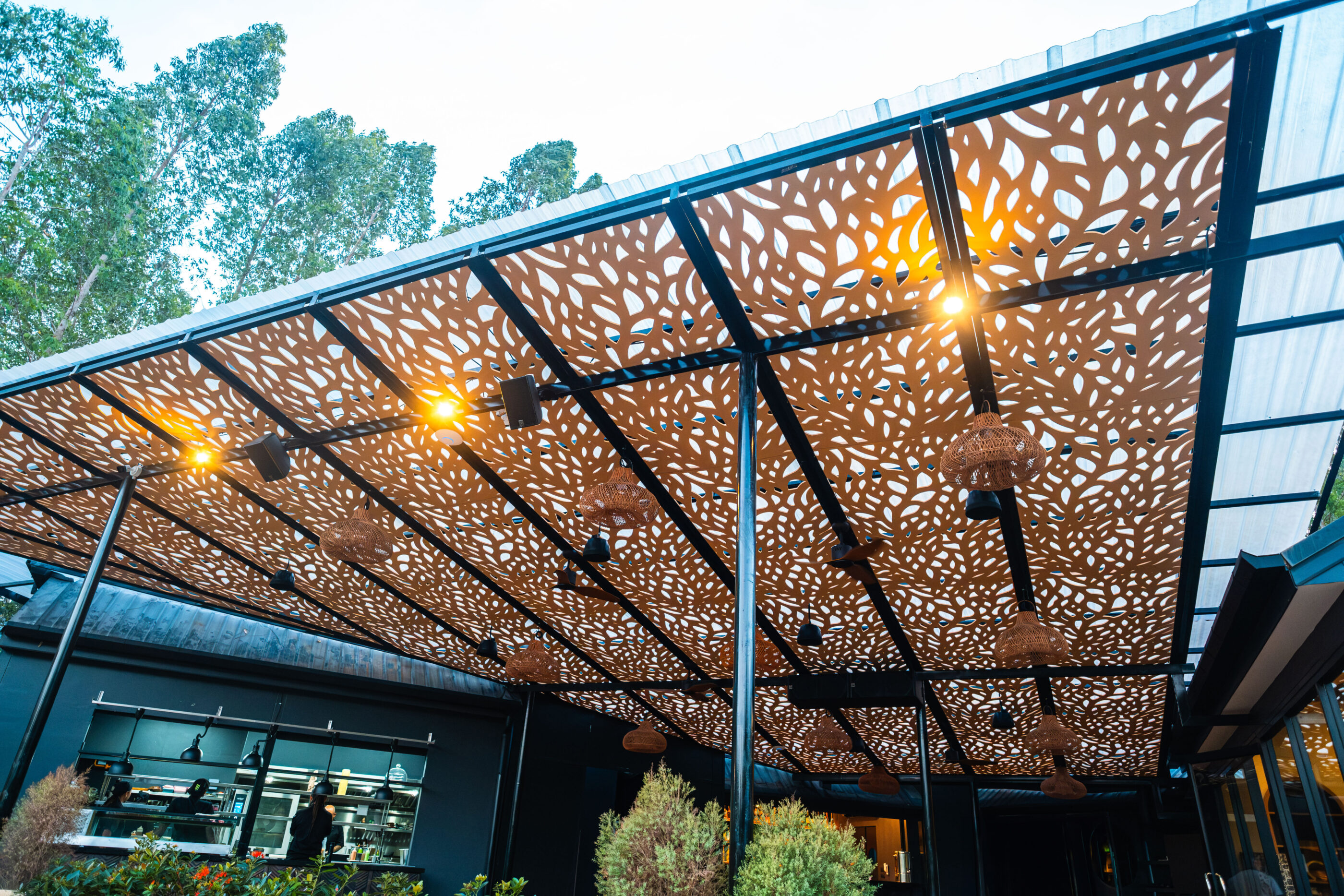
Pool areas demand weather-resistant equipment delivering energetic atmosphere while withstanding harsh tropical conditions. Thailand’s climate—intense sun, high humidity, chlorine exposure, and seasonal rain—destroys inadequate equipment rapidly. Marine-grade speakers feature UV-resistant enclosures, stainless steel grilles, waterproof connections, and sealed components surviving continuous outdoor exposure.
Sound coverage requirements differ from indoor spaces. Without walls and ceilings containing energy, outdoor areas require more speakers at higher individual power achieving even coverage. Distributed speaker systems—multiple units positioned strategically—prevent hot spots and dead zones while directing sound toward guest areas rather than neighboring properties.
Music programming balances energy with appropriateness. Daytime family periods favor upbeat contemporary music at moderate levels allowing conversation. Evening transitions to more sophisticated selections creating adult ambiance. Volume automation adjusts for ambient noise—quieter during calm periods, increasing when crowds generate background noise—maintaining consistent perceived levels.
Subwoofers add impact for resort properties emphasizing entertainment. Weather-resistant subwoofers deliver bass energy creating club-like atmosphere for pool parties and events. Placement requires careful consideration—excessive bass disturbs guests in nearby rooms and generates neighbor complaints. Professional design balances impact with consideration.
Restaurant and Dining Areas
Restaurant audio systems within hotels face similar requirements to standalone establishments but integrate within larger property infrastructure. Background music supports conversation without dominating—guests should converse comfortably at normal volume while experiencing pleasant atmospheric enhancement.
Multi-zone capability within dining spaces accommodates different areas. Main dining rooms might feature elegant jazz or classical selections. Bar areas use more energetic contemporary programming. Private dining rooms offer independent control for events and celebrations. Outdoor terraces require weather-resistant speakers with coverage accounting for open-air acoustics.
Integration with property-wide systems enables flexibility. Special events override normal programming. Announcements reach dining guests when appropriate. Emergency systems integrate for safety compliance. This integration maintains consistent operation while preserving restaurant-specific control.
Speech intelligibility matters for staff communication and announcements. Wireless microphones enable speeches at private events. Paging systems reach staff for service requests. These communication capabilities enhance operational efficiency while maintaining guest experience quality.
Lobby and Reception Areas
Hotel lobbies set first impressions requiring sophisticated acoustic environments. Background music creates welcoming atmosphere appropriate to brand positioning—upscale properties favor refined instrumental selections, while contemporary hotels use modern curated playlists. Volume remains subtle enough permitting conversation yet providing pleasant environmental enhancement.
Speech clarity proves critical for announcements and staff communication. Distributed ceiling speakers provide even coverage ensuring announcements reach all areas clearly. Automatic ducking reduces music volume during announcements, then restores normal levels—preventing announcements lost in background music or excessive manual volume adjustments.
Acoustic treatment addresses common lobby challenges. High ceilings and hard surfaces (marble, glass, tile) create reverberant spaces degrading speech clarity and music quality. Strategic acoustic panels control excessive reverberation without creating dead spaces. Treatment balances liveliness (maintaining sense of active space) with clarity (ensuring intelligible communication).
Architectural aesthetics constrain equipment placement. Visible speakers undermine design intent while inadequate coverage creates poor audio quality. Modern solutions include architecturally integrated speakers, invisible ceiling systems, and camouflaged installations maintaining visual design while delivering required performance.
Conference and Event Spaces
Conference rooms demand professional audio supporting presentations, video conferencing, and hybrid events. Microphone systems capture speech clearly—ceiling microphones for general meetings, wireless handheld and lapel microphones for presentations, boundary microphones for conference tables. Automatic mixing eliminates manual operation—systems activate microphones when people speak, mute unused channels, and balance levels automatically.
Video conferencing integration proves increasingly critical. Audio systems interface with Zoom, Microsoft Teams, and similar platforms providing clear communication. Echo cancellation prevents feedback. Noise reduction eliminates background distractions. Beamforming microphones focus on active speakers reducing ambient pickup. These technologies enable productive remote meetings matching in-person quality.
Presentation audio integrates laptop and media player sources. HDMI audio extraction routes presentation sound through room systems. Wireless presentation systems enable guests to stream content effortlessly. Multiple input support allows seamless source switching during events.
Flexibility enables space reconfiguration. Portable partition walls divide large spaces into smaller meeting rooms. Audio systems adapt—speakers and microphones reconfigure maintaining appropriate coverage regardless of room configuration. Preset controls recall appropriate settings for different layouts eliminating complex manual setup.
Spa and Wellness Areas
Spa environments require tranquility contradicting typical commercial audio approaches. Rather than energizing or entertaining, spa audio creates calming atmospheres supporting relaxation and treatments. Music selection emphasizes ambient textures, nature sounds, and gentle instrumental compositions. Volume remains barely perceptible—subliminal atmospheric enhancement rather than foreground listening.
Individual treatment rooms benefit from independent control allowing therapists to adjust ambiance for specific treatments and client preferences. Centralized systems provide curated playlists while enabling room-level volume adjustment and source selection. This balance maintains brand-appropriate programming while accommodating individual needs.
Acoustic isolation between treatment rooms prevents sound leakage disturbing adjacent clients. Quality construction with appropriate insulation creates privacy. Soundproofing investments enhance perceived luxury—guests notice absence of intrusion from neighboring spaces.
Reception and relaxation areas use slightly higher volumes than treatment rooms while maintaining calming character. Guests transition from active resort areas through progressively quieter zones approaching treatment spaces. This gradual acoustic transition enhances relaxation psychology.
Beach and Outdoor Recreation Areas
Beach areas combine pool-like weather exposure with unique acoustic challenges. Sand, sea breeze, and wave noise create demanding acoustic environments requiring robust equipment and thoughtful design. Speakers must survive salt exposure, mounting faces wind-blown sand, and connections resist corrosion.
Coverage patterns differ from enclosed pool areas. Without surrounding structures containing sound, energy disperses rapidly. Higher speaker quantities and output levels achieve target coverage. Directional speakers focus energy toward guest areas rather than broadcasting to neighboring properties or water.
Programming creates destination atmosphere. Beach clubs emphasize high-energy selections and DJ performances. Family beaches favor upbeat contemporary music. Quiet beach zones offer gentle background music or nature sounds. Volume balances atmosphere creation with natural ambiance—guests come to beaches experiencing ocean sounds, not merely outdoor nightclubs.
Portable and temporary installations serve special events. Outdoor weddings require temporary sound reinforcement. Beach parties demand additional coverage and bass impact. Professional systems include infrastructure supporting temporary expansions without permanent installation compromising everyday aesthetics.
Integration and Control Systems
Centralized Management
Modern hotel audio systems centralize control through network-based platforms. Property managers access all zones from central interfaces—desktop computers, tablets, or dedicated control panels. This centralization enables system-wide management without requiring physical presence at each location.
Cloud-based systems extend control beyond property boundaries. Corporate management monitors multiple properties remotely. Technical support troubleshoots issues without site visits. Software updates deploy centrally maintaining current functionality and security. This remote capability proves especially valuable for resort chains and properties in remote locations.
User interfaces balance capability with simplicity. Complex systems offering thousands of configuration options overwhelm typical hotel staff. Professional installations create simplified interfaces presenting essential controls—volume, source selection, preset recall—while hiding technical complexity. This approach empowers staff operation while maintaining sophisticated functionality.
Role-based access restricts control appropriately. General staff adjust volumes and recall presets but can’t modify system configuration. Technical staff access advanced settings. Administrators manage user permissions and system-wide parameters. This hierarchy prevents accidental misconfigurations while enabling appropriate control.
Scheduling and Automation
Automated scheduling maintains appropriate environments without manual intervention. Daily schedules trigger programming changes—breakfast music at 6:30 AM, lunch transitions at 11:00 AM, evening ambiance at 6:00 PM, quiet hours at 10:00 PM. Weekly variations accommodate different weekend versus weekday patterns. Seasonal adjustments reflect peak versus low occupancy periods.
Event-based automation responds to specific triggers. Meeting room bookings activate appropriate systems and presets. Spa appointments configure treatment room ambiance. Restaurant reservations pre-adjust dining area zones. This integration between property management and audio systems creates seamless experiences while reducing staff workload.
Conditional automation adapts to changing conditions. Ambient noise sensors adjust volume maintaining consistent perceived levels despite varying background noise. Occupancy sensors reduce output in empty spaces saving power and reducing equipment wear. Weather sensors adapt outdoor zones for rain or high wind. These intelligent responses optimize performance and efficiency.
Override capabilities preserve flexibility. Staff override scheduled programming for special circumstances—extending pool hours during events, adjusting restaurant ambiance for private parties, reconfiguring meeting rooms for unexpected needs. Simple override interfaces enable quick adjustments while scheduled programming resumes automatically afterward.
Source Management
Content delivery systems range from traditional to sophisticated depending on property needs and budget. Basic installations use consumer streaming services (Spotify, Apple Music) providing unlimited music libraries with simple operation. Commercial licensing solutions ensure legal compliance—consumer streaming services prohibit business use without appropriate licensing.
Professional content delivery platforms offer curated hospitality-specific programming. Services provide brand-appropriate playlists, automatic scheduling, and legal licensing handling compliance complexity. Content updates remotely without staff intervention. These platforms cost more than consumer solutions but deliver professionally programmed content maintaining consistent quality.
Local storage enables internet-independent operation. Network-attached storage holds extensive music libraries accessible throughout the property. This approach provides reliability during internet outages and reduces streaming costs for high-bandwidth properties. Combined with streaming services, local storage creates robust hybrid systems.
Integration with live performance and DJ equipment adds versatility. Meeting rooms connect to performer equipment for events. Pool areas integrate DJ mixers for parties. These inputs route through property systems maintaining central control while enabling flexible content sources.
Technical Considerations
Weather Resistance for Tropical Climates
Thailand’s tropical climate demands rigorous weatherproofing standards. Outdoor equipment endures temperature swings, UV exposure, monsoon rains, high humidity, and salt air (coastal properties). (See: marine-grade coastal villa audio guide.) Inadequate specifications lead to rapid failures—corrosion, driver deterioration, connection failures, and enclosure degradation.
IP (Ingress Protection) ratings indicate environmental protection levels. IP65 rating provides dust-tight enclosures and water jet protection suitable for covered outdoor areas. IP66 offers higher water protection for exposed locations. IP67 adds temporary immersion protection for areas facing flooding or pressure washing. Professional installations specify appropriate ratings for specific locations.
Material selection affects longevity. Stainless steel hardware resists corrosion far better than zinc-plated alternatives. UV-stabilized plastics and powder-coated aluminum enclosures maintain appearance and integrity under sun exposure. Marine-grade components designed for yacht and coastal applications provide ultimate durability but command premium pricing.
Maintenance schedules account for environmental degradation. Monthly cleaning removes salt and dirt accumulation. Quarterly inspections identify developing corrosion or deterioration. Annual component replacement catches wear before failures occur. These preventive measures extend equipment life and prevent mid-season failures during peak occupancy.
Distributed Audio Architecture
Hotel audio systems use distributed architecture—many moderate-power speakers rather than few high-power units. This approach delivers even coverage, maintains aesthetic integration, and provides redundancy. Single speaker failures affect small areas rather than entire zones. Maintenance occurs incrementally without major system outages.
70-volt and 100-volt distributed systems simplify infrastructure. These constant-voltage approaches allow multiple speakers on single amplifier channels using parallel connections. Wire gauge requirements relax compared to low-impedance systems. Long cable runs introducing voltage drop matter less. These advantages prove especially valuable for sprawling resort properties.
Speaker transformer taps enable individual level adjustment. Each speaker includes selectable power taps (1W, 2W, 4W, etc.) allowing installers to balance coverage perfectly. High-traffic areas use higher taps for additional output. Quiet zones use lower taps. This flexibility optimizes coverage without requiring numerous amplifier channels.
Zoning architecture balances flexibility with economy. Over-zoning creates excessive cost and complexity—dozens of zones each requiring dedicated amplifiers, controls, and programming. Under-zoning sacrifices flexibility—large zones can’t adapt to different needs. Professional design finds optimal balance considering property layout, operational requirements, and budget.
Acoustic Treatment
Hotel spaces range from acoustically friendly (carpeted guest rooms) to challenging (marble lobbies). Acoustic treatment addresses problematic spaces improving speech intelligibility, music quality, and overall environmental comfort.
Lobbies and public spaces benefit most from treatment. High ceilings and hard surfaces create long reverberation times and harsh reflections. Fabric-wrapped acoustic panels, decorative wood features with absorptive backing, and acoustic ceiling treatments reduce problematic reflections. Modern products integrate architecturally—guests appreciate atmospheric improvement without noticing acoustic treatment.
Conference and meeting rooms require careful acoustic design. Proper treatment prevents problematic echoes degrading video conferencing quality, ensures speech intelligibility for presentations, and maintains clear communication. Combined with quality microphone and speaker systems, acoustic treatment delivers professional meeting experiences.
Budget-conscious approaches prioritize critical areas. Treating first-reflection points—walls opposite speakers, ceiling areas above seating—delivers maximum improvement per dollar invested. Complete treatment costs 15-30% of audio equipment budgets; strategic treatment targeting critical areas achieves 70% of benefit for 30-40% of cost.
Case Study: Nikki Beach Resort Samui
Nikki Beach Resort Samui demonstrates comprehensive hotel audio implementation addressing diverse zone requirements while maintaining cohesive brand atmosphere. The property combines luxury resort amenities with energetic beach club entertainment requiring sophisticated audio flexibility.
The installation integrated multiple distinct zones:
Beach Club Area: High-output weather-resistant systems deliver club-quality sound for daytime and evening entertainment. Line array speakers provide even coverage across large outdoor spaces. Weather-resistant subwoofers add bass impact without disturbing resort areas. Cardioid subwoofer configuration reduces sound propagation toward guest rooms while maintaining powerful bass toward beach.
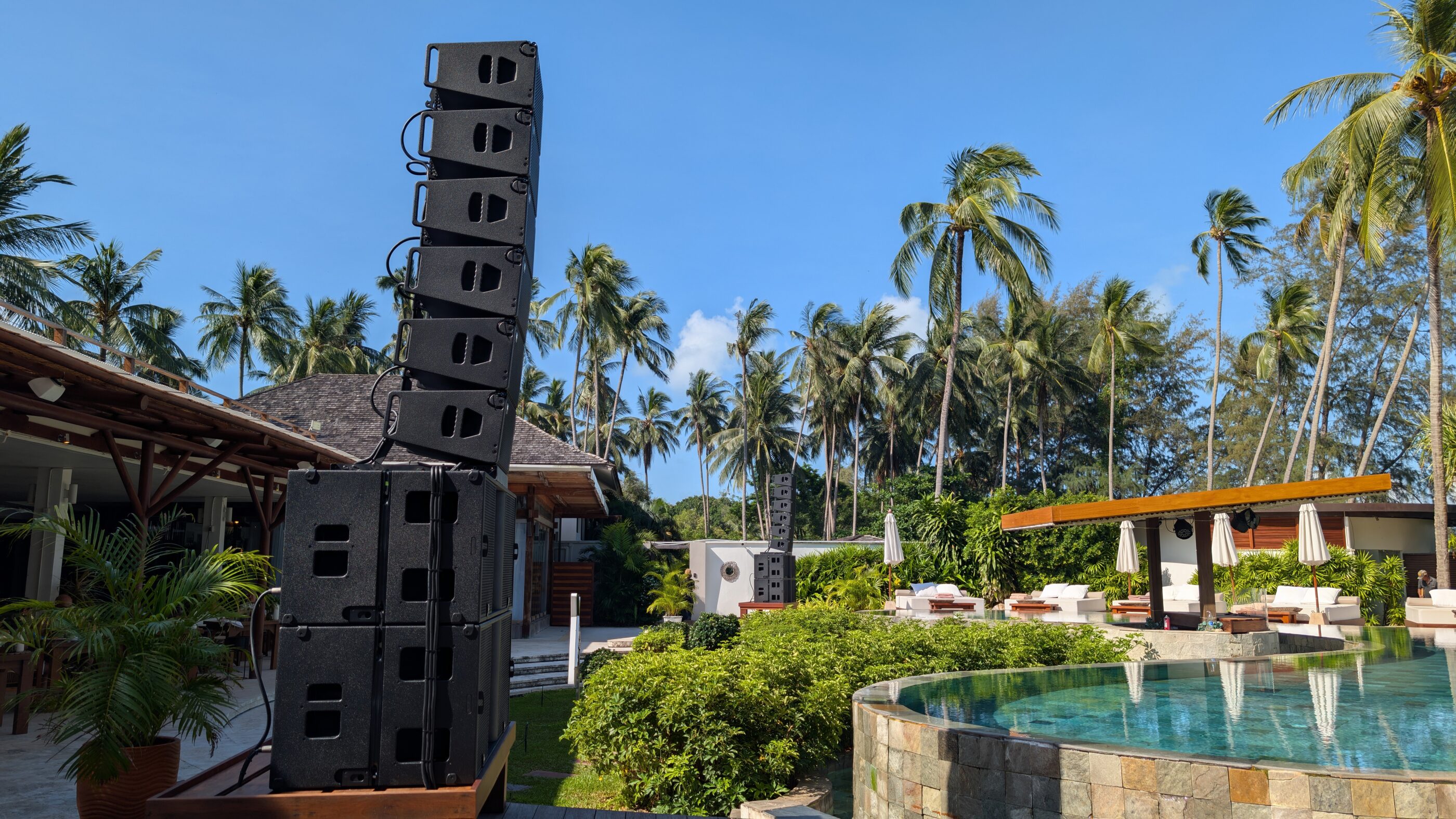
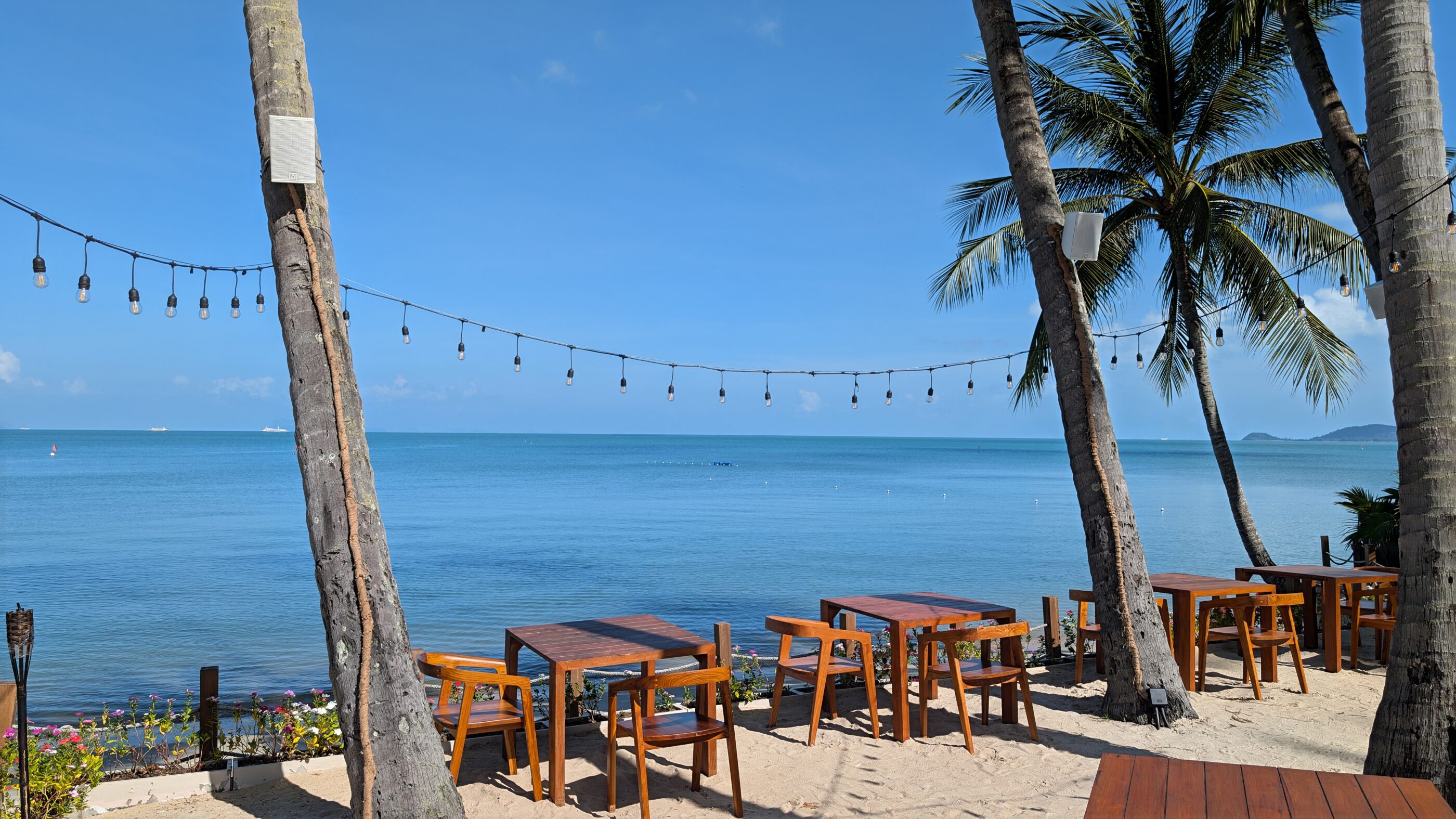
Pool and Outdoor Dining: Distributed weather-resistant speakers create consistent coverage. Separate zones allow independent control for different areas—swim-up bar maintains party atmosphere while dining areas provide sophisticated ambiance. Automated scheduling transitions from family-friendly daytime to adult-oriented evening programming.
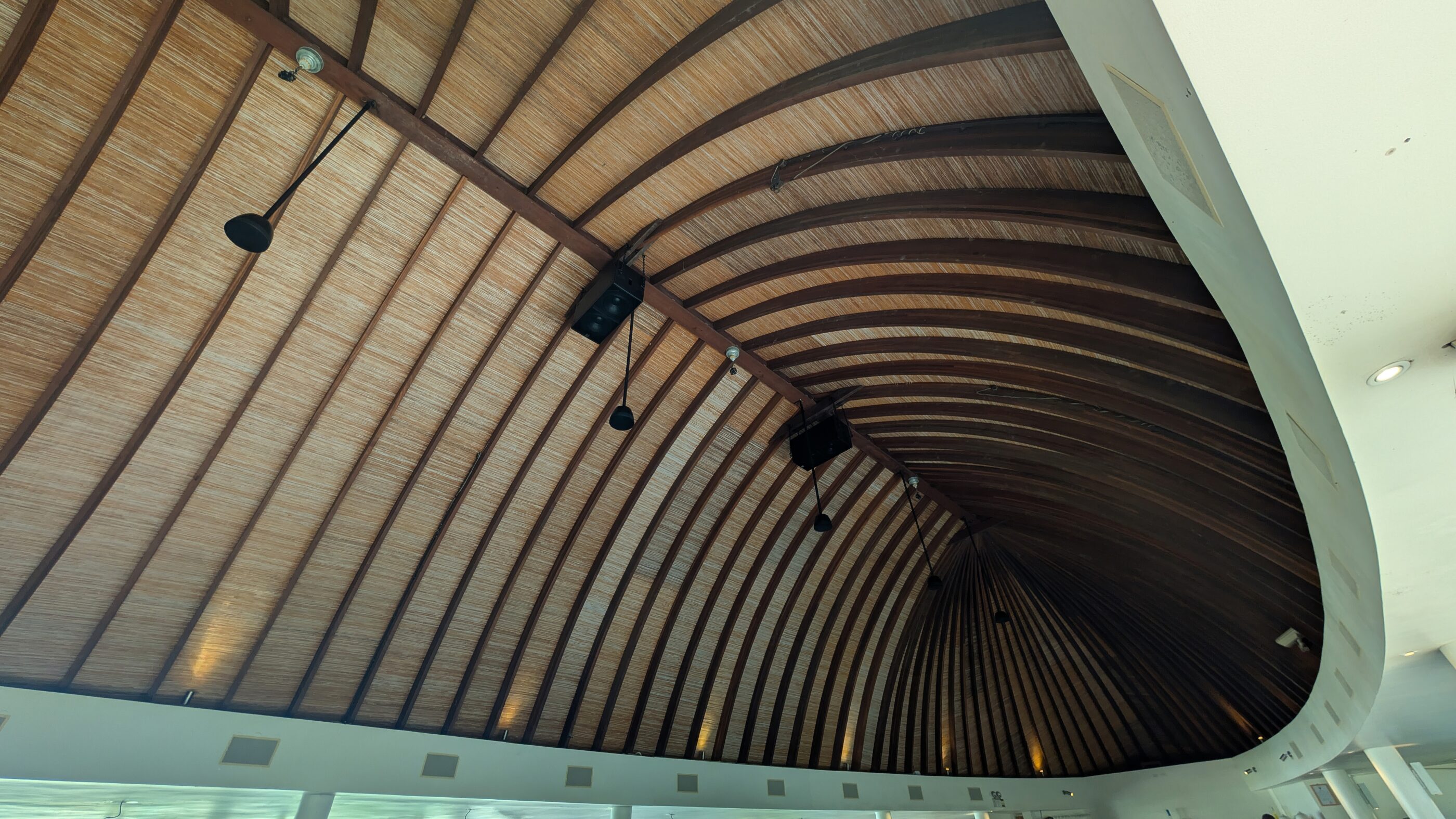
Restaurant and Indoor Spaces: Professional-grade ceiling speakers deliver clear background music supporting conversation. Integration with outdoor zones enables consistent brand atmosphere while maintaining appropriate volume levels. Speech reinforcement supports special events and announcements.
Conference and Meeting Facilities: Professional AV systems support corporate retreats and events. Wireless microphones, video conferencing integration, and presentation audio enable productive meetings. Preset controls allow quick reconfiguration for different event types.
Central control systems enable property management to adjust all zones from unified interfaces. Automated scheduling maintains appropriate programming throughout the day. Weather sensors adapt outdoor zones for changing conditions. The integrated approach creates seamless guest experience while simplifying operations.
The result: cohesive brand atmosphere from check-in through departure, operational efficiency through centralized control, and venue flexibility supporting diverse revenue opportunities from corporate events to beach parties.
Installation and Support
Professional Installation Process
Hotel audio installation requires coordination with property operations minimizing guest impact. New construction installations happen during build-out avoiding operational disruption. Existing property upgrades require careful scheduling—working during low occupancy periods, phasing installations to maintain operational zones, and coordinating with other renovation activities.
Site surveys document existing conditions, identify challenges, and inform detailed planning. Surveys capture architectural details, structural constraints, electrical infrastructure, IT network capabilities, and operational requirements. This documentation enables accurate proposals and prevents mid-installation surprises.
Pre-installation planning coordinates multiple trades. Electrical contractors prepare appropriate circuits. IT staff provision network infrastructure. General contractors coordinate access and scheduling. Audio installers synchronize with all parties preventing conflicts and delays. This coordination proves especially critical for operating properties where construction activity must not disturb guests.
Physical installation follows systematic processes. Main equipment racks centralize electronics in climate-controlled technical spaces. Speaker installation integrates architecturally—flush-mount ceiling speakers, in-wall installations for aesthetics, weather-resistant outdoor mounting. Cable infrastructure uses organized pathways, appropriate ratings (plenum, outdoor), and comprehensive labeling enabling future service.
System commissioning includes comprehensive testing, acoustic optimization, and staff training. Engineers verify all zones function correctly, measure and optimize frequency response, program automation and presets, configure user interfaces, and train staff on operation and basic troubleshooting. This commissioning transforms installed equipment into operational systems.
Ongoing Support and Maintenance
Professional installations include maintenance planning preserving performance and longevity. Quarterly inspections check connections, clean speaker grilles, verify equipment operation, update software, and test emergency systems. These preventive measures cost far less than emergency repairs and maintain guest-facing quality.
Remote monitoring enables proactive support. Networked systems report equipment health, operational status, and error conditions. Anomalies trigger alerts before guests notice problems. Technical support diagnoses issues remotely and often resolves problems without site visits. This remote capability proves valuable for properties in remote locations.
Service contracts provide priority support, scheduled maintenance, and often include system health monitoring. Rather than calling for help when failures occur, contracted properties receive preventive care catching developing problems early. Service costs become predictable operating expenses rather than unpredictable emergency expenditures.
Training and documentation ensure successful long-term operation. Comprehensive documentation includes system designs, equipment specifications, configuration details, and operational procedures. Regular training updates accommodate staff turnover and system enhancements. Well-documented and trained properties maximize investment value while minimizing disruption.
Budget and Return on Investment
Understanding Investment Requirements
Hotel audio system costs vary enormously depending on property size, zone quantity, quality tier, and feature complexity. Small boutique properties might invest 800,000-2,000,000 THB for basic multi-zone systems. Medium resorts (50-150 rooms) require 2,000,000-6,000,000 THB for comprehensive installations. Large luxury properties exceed 8,000,000-15,000,000+ THB for sophisticated systems covering extensive grounds with premium equipment.
Cost factors extend beyond equipment. Acoustic treatment, infrastructure preparation, integration complexity, and installation labor significantly impact budgets. Properties pursuing architectural integration and sophisticated automation invest more than basic functional installations. Long-term value often justifies premium initial investment through enhanced guest experience and operational efficiency.
Equipment tier selection dramatically affects pricing. Entry-level commercial systems cost 40-50% less than premium installations but sacrifice sonic quality, longevity, and support. Premium systems deliver superior performance, reliability, and comprehensive vendor support. Most successful hospitality installations occupy middle tiers—professional performance without ultra-premium pricing.
Phased implementation spreads investment across time. Properties might install core infrastructure and priority zones initially, then expand during subsequent phases. This approach reduces initial outlay while establishing functional foundation. Planning for future expansion during initial design prevents expensive retrofits.
Measuring Return on Investment
Direct revenue attribution challenges make hotel audio ROI measurement complex. Unlike revenue-generating amenities (spas, restaurants), audio systems enhance overall guest experience rather than generating discrete transactions. However, measurable impacts exist.
Guest satisfaction scores correlate with environmental quality. Properties investing in comprehensive audio systems consistently score higher on ambiance-related review metrics. Positive reviews drive booking decisions—hospitality research shows significant percentages of guests consult reviews before booking. Superior atmosphere translates to competitive advantage.
Operational efficiency provides tangible savings. Centralized systems reduce labor requirements for music management, event setup, and paging operations. Automated scheduling eliminates manual programming. Integration with property management systems streamlines operations. These efficiencies often justify 20-30% of system investment through reduced operating costs.
Space flexibility enables revenue optimization. Conference rooms transform for social events. Restaurants adapt for different occasions. Pool areas shift from family to adult venues. This versatility maximizes revenue per square meter while maintaining appropriate guest experiences. Properties with versatile spaces command premium pricing and achieve higher utilization rates.
Brand positioning justifies premium pricing. Luxury properties charging premium rates must deliver exceptional experiences across all touchpoints. Professional audio systems reinforce luxury positioning allowing premium rate justification. The investment becomes cost of market positioning rather than discretionary amenity.
Why Choose Professional Installation
Professional hotel audio installation differs fundamentally from consumer-grade solutions or basic commercial systems. The engineering approach begins with comprehensive property analysis understanding operational requirements, brand positioning, and guest expectations. Professional designers create integrated systems rather than disconnected zone solutions.
Multi-property expertise informs design decisions. Experienced installers understand hospitality-specific requirements—guest privacy considerations, aesthetic integration priorities, operational simplicity needs, and 24/7 reliability requirements. This specialized knowledge prevents mistakes common when general commercial integrators attempt hospitality projects.
Integration capabilities extend beyond audio. Professional systems interface with property management platforms, building automation, emergency systems, and IT infrastructure. This integration creates cohesive operations rather than isolated audio installations. Simple unified interfaces enable staff operation without technical expertise.
Long-term support relationships extend beyond installation. Professional integrators provide ongoing system health monitoring, proactive maintenance, regular training updates, and upgrade planning. This partnership approach maximizes investment value while adapting to evolving operational needs and technology advancement.
Clubtek Thailand brings hospitality-specialized expertise, multi-brand knowledge, and proven track record (including Nikki Beach Resort Samui) to hotel audio installation throughout Thailand. Our approach combines operational analysis, professional-grade equipment from leading manufacturers, and comprehensive support ensuring properties deliver exceptional guest experiences.
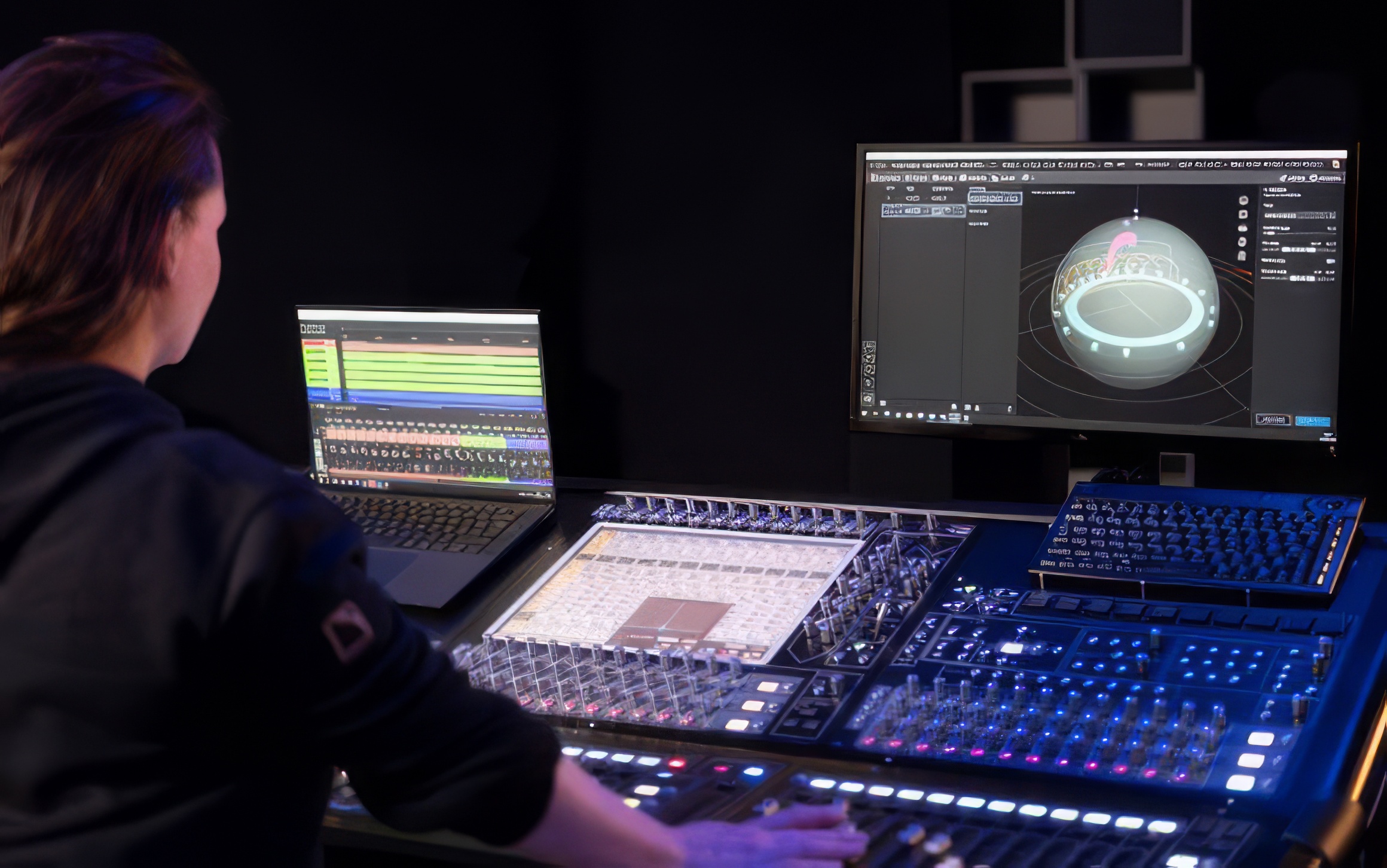
Ready to Enhance Your Property’s Guest Experience?
Professional hotel audio systems create the seamless atmospheric quality that guests notice, appreciate, and mention in glowing reviews. Whether you’re developing a new property or upgrading existing systems, investing in proper audio installation delivers measurable returns through enhanced guest satisfaction and operational efficiency.
Contact Clubtek Thailand for a professional consultation:
📱 WhatsApp: +66 95 428 8420
🌐 Website: clubtek-th.com
Our team provides free site surveys, detailed proposals considering your specific property requirements, and comprehensive support ensuring your audio systems deliver exceptional guest experiences for years to come.
Related Hospitality Audio Guides Across Thailand
Hotel and resort audio overlaps with several adjacent venue categories. See our specialized guides on restaurant sound system design, beach club sound engineering, and conference room AV installation for meeting and event spaces. The technical foundation for resort ballrooms and large pool decks is covered in our line array vs point source comparison. For coastal resort projects, see our service pages for Phuket and Koh Samui, plus the Nikki Beach Samui case study.
Related coverage
For Samui’s luxury resort market, see our guide on Koh Samui resort audio. For in-resort fitness center sound systems, see our guide on hotel gym and fitness center audio.