Introduction
A conference room is only as effective as its audio-visual system. When microphones cut out mid-presentation, when remote participants can’t hear the speaker, when the projector refuses to connect — meetings fall apart, decisions get delayed, and businesses lose money.
Thailand’s corporate and hospitality sectors are expanding rapidly. International companies are establishing regional offices in Phuket. Hotels across Phuket, Samui, Krabi, and Pattaya are competing for the lucrative MICE (Meetings, Incentives, Conferences, Exhibitions) market. Coworking spaces are multiplying in every major city. All of them need conference rooms that actually work.
Yet most conference rooms in Thailand suffer from the same problems: poor audio intelligibility, unreliable video conferencing connections, equipment that nobody knows how to operate, and systems cobbled together from consumer-grade components never designed for professional use.
This guide covers everything you need to know about professional conference room AV installation — from understanding what each room type requires, to selecting the right equipment, to avoiding the costly mistakes that turn meeting spaces into frustration zones.
Types of Conference Room AV Systems
Not every meeting space needs the same technology. A 6-person huddle room has fundamentally different requirements than a hotel ballroom hosting 300 delegates. Understanding room types is the first step toward choosing the right system.
Corporate Boardrooms
Boardrooms demand premium quality and absolute reliability. Executives making critical decisions cannot tolerate audio dropouts or fumbling with cables. These rooms typically seat 10–20 people around a large table and require ceiling microphone arrays for hands-free pickup, large-format displays (75″–98″ or dual-screen configurations), integrated video conferencing with camera tracking that follows the active speaker, and one-touch control panels that start meetings without IT support.
Sound quality is paramount — every word must be captured clearly for both local and remote participants. Professional DSP (Digital Signal Processing) platforms handle echo cancellation, automatic microphone mixing, and feedback suppression simultaneously.
Hotel Conference Facilities
Hotels face a unique challenge: their conference rooms must serve different clients with different needs every week. A pharmaceutical company running a medical symposium on Monday needs different AV capabilities than a tech startup hosting a product launch on Thursday.
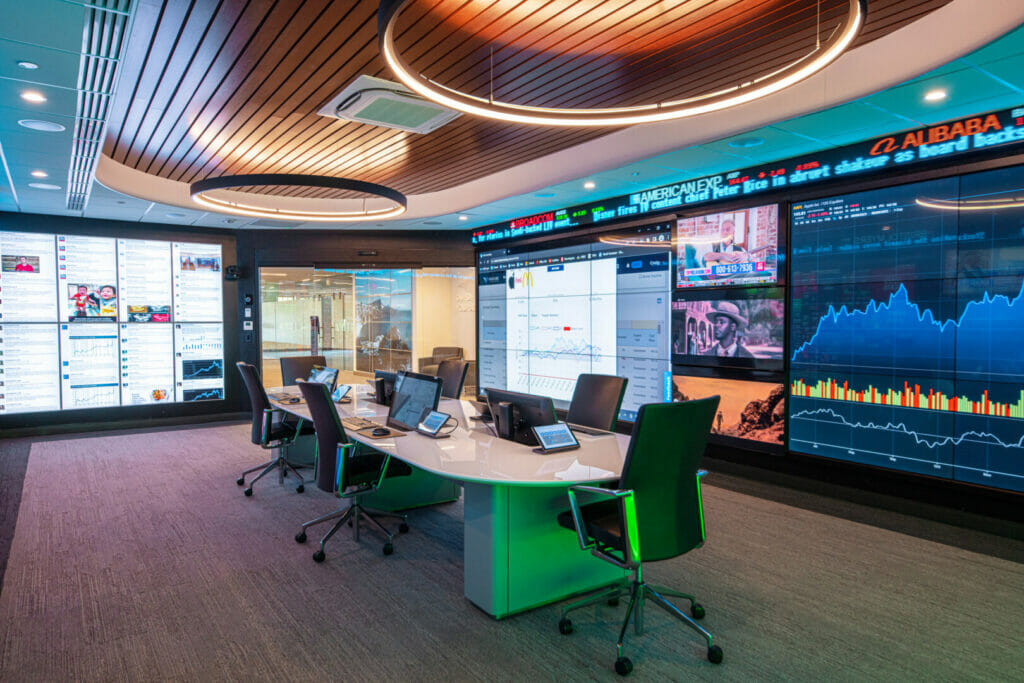
Flexibility is the key requirement. Divisible ballrooms need independent audio zones that can merge seamlessly. Wireless presentation systems must accept any laptop without pre-installed software. (See: NBTC wireless microphone licensing and frequencies guide for Thailand.) Microphone systems need to switch between podium, handheld, and lapel configurations within minutes. For hotels already investing in multi-zone audio systems across their properties, conference AV becomes another zone within a centralized control architecture.
Video Conference and Hybrid Meeting Rooms
The post-pandemic workplace made hybrid meetings permanent. When half your team is in Phuket and the other half is dialing in from Singapore, the AV system must make remote participants feel present in the room — not like afterthoughts watching through a webcam.
Critical components include PTZ (pan-tilt-zoom) cameras with speaker tracking, beamforming microphone arrays that isolate voices from background noise, high-quality echo cancellation preventing the dreaded feedback loop, and native integration with Microsoft Teams, Zoom, and Google Meet. USB connectivity and BYOD (Bring Your Own Device) wireless sharing are now standard expectations, not premium features.
Training Facilities and Seminar Rooms
Training rooms prioritize audience engagement over boardroom elegance. Systems need wireless microphones for presenters who move around the room, recording and streaming capabilities for capturing sessions, multiple display positions so every seat has clear sightlines, and audience response integration for interactive sessions. Larger training facilities often benefit from professional video and LED display systems that keep content visible even in rooms seating 50–100 participants.
Core Components of a Professional Conference AV System
Audio: The Foundation of Every Meeting
Audio quality makes or breaks conference room effectiveness. Participants will tolerate mediocre video, but the moment they can’t hear clearly, the meeting is over.
Professional conference audio starts with the right microphone architecture. Ceiling microphone arrays provide clean pickup without table clutter — ideal for boardrooms where aesthetics matter. Boundary microphones sit flush on conference tables, capturing voices in smaller rooms. Gooseneck microphones at podiums deliver focused pickup for presenters. Wireless handheld and lapel systems serve flexible spaces where the speaker position changes.
Behind the microphones, DSP platforms from manufacturers like QSC Q-SYS, Biamp, and Bosch DICENTIS handle the heavy processing: automatic mixing (only activating microphones with active speakers), acoustic echo cancellation (critical for video calls), noise reduction filtering out air conditioning hum and traffic, and feedback suppression preventing embarrassing squeals.
Speaker placement is equally important. Ceiling speakers deliver even coverage across conference tables. For larger rooms, professional audio system design ensures consistent sound pressure levels from the front row to the back wall.
Video: Displays, Cameras, and Wireless Sharing
Modern conference rooms have moved beyond single projectors. Current best practice combines a primary display (commercial-grade LED panel, 75″ minimum for rooms seating 10+) with a dedicated video conferencing camera positioned at eye level, wireless presentation capability accepting content from any device, and optional secondary displays for rooms deeper than 8 meters.
Camera technology has advanced dramatically. AI-powered cameras now automatically frame speakers, switch between overview and close-up shots, and even create virtual “gallery views” of in-room participants for remote attendees.
Control and Automation
The best AV system is worthless if nobody can operate it. Professional conference rooms use unified control systems — a single touch panel or wall-mounted controller that handles everything: display power, source selection, volume, lighting presets, and video call connection.
One-button meeting start is the gold standard. Walk in, press “Start Meeting,” and the system powers on displays, launches the video conference platform, adjusts lighting, and activates microphones automatically. This kind of integration falls under smart AV control and automation systems — and it’s what separates professional installations from consumer equipment stacked on a shelf.
Common Problems With Conference Room Audio in Thailand
Thailand’s environment creates specific challenges that generic international AV guides don’t address.
Humidity and climate damage. Thailand’s average humidity of 70–80% attacks electronics relentlessly. Consumer-grade equipment not rated for tropical conditions develops corrosion on connectors, condensation inside displays, and premature amplifier failure. Professional installations specify components rated for high-humidity environments and include ventilation planning for equipment racks.
Acoustic nightmares. Thai commercial buildings love hard surfaces — marble floors, glass walls, concrete ceilings. These create excessive reverberation that destroys speech intelligibility. A room can have the most expensive microphones in the world, and if the acoustics aren’t treated, remote participants will hear an unintelligible echo chamber. Professional acoustic assessment and treatment (absorptive panels, diffusers, ceiling treatment) solve this at the source.
Unreliable network infrastructure. Video conferencing depends on stable, high-bandwidth internet. Many Thai buildings have inadequate network infrastructure in their conference rooms — shared Wi-Fi connections that collapse when 20 laptops connect simultaneously. Professional AV installations include dedicated network drops with QoS (Quality of Service) configuration prioritizing video and audio traffic.
The “consumer equipment” trap. Hotels and offices frequently purchase consumer soundbars, webcams, and Bluetooth speakers expecting professional results. These devices weren’t designed for rooms larger than a home office. They lack echo cancellation adequate for conference distances, their microphones can’t pick up voices beyond 2–3 meters, and they have no integration capability with room control systems.
Conference Room AV Installation Process
Professional installation follows a structured methodology that prevents expensive mistakes.
Step 1: Technical Requirements and Room Assessment. Every project begins with a site visit. Engineers measure room dimensions, assess acoustic properties (reverberation time, ambient noise levels), evaluate existing electrical and network infrastructure, and document usage requirements — who uses the room, how often, for what types of meetings, and what platforms they use for video calls.
Step 2: System Design. Based on assessment data, the design phase produces microphone configuration and placement plans, speaker positioning for optimal coverage, control interface layouts, video conferencing integration architecture, and — for larger projects — 3D acoustic modeling predicting system performance before a single component is installed.
Step 3: Installation. Professional mounting, structured cabling (no visible wires crossing conference tables), equipment rack building, system programming, and acoustic treatment where needed. Clean cable management isn’t cosmetic — it prevents signal interference and simplifies future maintenance.
Step 4: Training and Handover. Staff training on daily operation, control system customization for specific meeting types, complete documentation, and technical support procedures. The system is only finished when the people using it can operate it confidently.
Timeline: Standard conference rooms take 2–4 weeks from design approval to handover. Hotel conference facilities with multiple rooms and centralized control typically require 6–10 weeks. For detailed timelines across different project types, see our FAQ on audio-visual installation.
How Much Does Conference Room AV Cost in Thailand?
Budget ranges vary significantly based on room size, equipment tier, and integration complexity.
Small meeting rooms and huddle spaces (4–8 people): 150,000–400,000 THB. Includes a commercial display, USB conferencing camera, ceiling microphone, compact DSP, and basic control. Suitable for daily video calls and small team meetings.
Medium conference rooms (10–20 people): 400,000–900,000 THB. Includes larger display or dual screens, ceiling microphone arrays, professional DSP with full echo cancellation, PTZ camera with speaker tracking, touch panel control, and acoustic treatment. This is the most common corporate boardroom specification.
Large conference and training rooms (20–50 people): 900,000–2,000,000 THB. Multiple display positions, distributed ceiling microphone coverage, high-end DSP platform, multiple camera positions, recording capability, and comprehensive automation. Hotels and corporate training centers typically fall in this range.
Hotel ballroom and multi-room conference centers: 2,000,000–5,000,000+ THB. Divisible room configurations with independent and merged audio zones, centralized control across all spaces, portable and permanently installed microphone systems, integration with hotel property management, and built-in live streaming capability.
These figures include equipment, installation, programming, acoustic treatment, and training. For a more detailed breakdown across all venue types, visit our pricing FAQ.
Conference AV for Hotels and Hospitality Venues
Thailand’s position as a global MICE destination makes hotel conference AV a strategic investment, not just a facility upgrade. Hotels in Phuket, Samui, Krabi, and Pattaya compete directly for international conference bookings, and AV capability is a decisive factor for event planners evaluating venues.
Hotel conference AV requires thinking beyond individual rooms. Event planners expect divisible spaces that can be combined or split with seamless audio transitions, overflow rooms with live audio and video feeds from the main conference, simultaneous interpretation systems for international events, and recording and live streaming for hybrid conference formats.
Integration with existing hotel infrastructure is critical. Conference AV should connect to the property’s centralized automation platform, allowing staff to manage conference rooms alongside lobby audio, restaurant zones, and pool areas from a unified interface. Hotels already running dedicated conference audio systems can extend their capabilities with video conferencing and automation upgrades without replacing existing equipment.
Why Professional Installation Matters
The temptation to save money with a DIY approach or a general IT contractor is understandable. The results, however, are predictable — and expensive to fix.
Professional AV integrators bring acoustic expertise that IT departments don’t have. Understanding how sound behaves in a specific room — where reflections cause problems, where microphone placement creates phase cancellation, where speakers need to be aimed — requires specialized knowledge and measurement tools. A microphone in the wrong position can make a 500,000 THB system sound worse than a 50,000 THB portable speaker.
3D acoustic modeling — using industry-standard software like EASE — predicts exactly how a system will perform before installation begins. This eliminates the guesswork that causes costly redesigns after the fact. It shows precise sound coverage maps, identifies acoustic problem areas requiring treatment, and validates equipment selection against actual room conditions.
Professional integrators also provide system programming that consumer equipment simply doesn’t offer. DSP tuning, automatic mixer configuration, control system logic, and platform integration require certified expertise — particularly with enterprise platforms like QSC Q-SYS, Crestron, and Biamp that power serious conference facilities.
Conference Room AV Installation Across Thailand
Conference AV needs exist everywhere business happens in Thailand.
Phuket — As the primary base for professional AV installation in Phuket, the island’s growing hotel conference market and expanding international business community drive steady demand. Luxury resorts competing for MICE bookings increasingly require world-class conference facilities alongside their entertainment and hospitality audio systems.
Koh Samui — The island’s luxury resort segment is investing heavily in conference capabilities to attract corporate retreats and incentive travel groups. Properties that already feature professional audio installations are natural candidates for conference AV additions.
Pattaya — A major MICE destination with large-format hotels and convention facilities. The city’s conference market serves both domestic corporate events and international conventions, requiring high-capacity AV systems.
Krabi and emerging destinations — Boutique resorts and wellness retreats increasingly include meeting facilities for corporate groups, requiring compact but professional AV solutions.
With engineering teams based in Phuket and regular project work across all major Thai destinations, response times range from same-day for Phuket to 24–48 hours for other regions. View our complete project portfolio for examples across different locations and venue types.
Frequently Asked Questions
What is the best video conferencing platform for conference rooms in Thailand?
Microsoft Teams and Zoom dominate the Thai corporate market. Professional conference AV systems are platform-agnostic — they integrate natively with Teams, Zoom, Google Meet, and Webex through certified USB and network connections. The AV system should never lock you into a single platform.
Can you upgrade an existing conference room without a full replacement?
Yes. Many conference room upgrades involve adding components to existing infrastructure — replacing a consumer webcam with a PTZ camera, adding ceiling microphones to a room that only has a table speakerphone, or integrating a control panel for one-touch operation. A professional assessment identifies what can be retained and what needs replacement.
How do you handle acoustic problems in rooms with glass walls and hard floors?
Acoustic treatment doesn’t mean covering every surface with foam panels. Targeted placement of absorptive panels at primary reflection points, acoustic ceiling tiles, and strategic furniture positioning can dramatically improve speech intelligibility while maintaining the room’s visual design. Professional measurement identifies exactly where treatment delivers the highest impact.
Do conference room AV systems require ongoing maintenance?
Professional systems are designed for reliability, but annual maintenance ensures consistent performance. This includes firmware updates for DSP and control systems, microphone and camera calibration checks, cable and connector inspection (especially important in Thailand’s humid climate), and software updates for video conferencing platform compatibility. Our installations include comprehensive support packages — details are available on our FAQ page.
What brands do you recommend for conference room audio?
Equipment selection depends on room requirements, not brand preference. For DSP and networked audio, QSC Q-SYS and Biamp are industry leaders. Shure and Sennheiser lead in microphone technology. For control systems, Crestron sets the standard. We work with over 200 professional audio-visual brands, selecting the optimal combination for each specific project.
Get a Professional Conference Room Assessment
Whether you’re building a new conference facility, upgrading an existing meeting room, or planning a hotel conference center, the right AV system transforms how your business communicates.
Clubtek provides free, comprehensive consultations including site visits, acoustic assessment, and detailed proposals with 3D modeling for larger projects. With 12+ years of professional AV integration experience and 100+ completed installations across Thailand, we engineer conference rooms that work — every meeting, every time.
Book your free consultation or contact us directly:
For LED video walls and large-format displays in conference and event spaces, see our LED video systems Thailand installation guide. For DMX scene control and integrated AV automation, explore Clubtek smart AV automation. Hotel meeting venues should also reference our hotel multi-zone audio guide.