Introduction
LED video systems Thailand installations transform how guests experience commercial venues. Walk into any high-end nightclub in Phuket and the visual impact hits immediately — massive LED walls pulsing with content behind the DJ booth, seamless video displays wrapping lobby walls, projection mapping transforming bare architecture into immersive environments. Video technology has become the defining element separating premium hospitality venues from forgettable ones.
Yet most venue operators approach LED and video installations with limited understanding of the technology. They purchase based on price per square meter without considering pixel pitch requirements, viewing distances, or integration complexity. The result: expensive displays that look washed out, require constant maintenance, or simply don’t fit the venue’s operational needs.
This guide covers everything venue operators need to know about professional LED video systems Thailand-wide — from understanding core technologies to selecting equipment matched to specific venue types, to avoiding the costly mistakes that plague rushed installations.
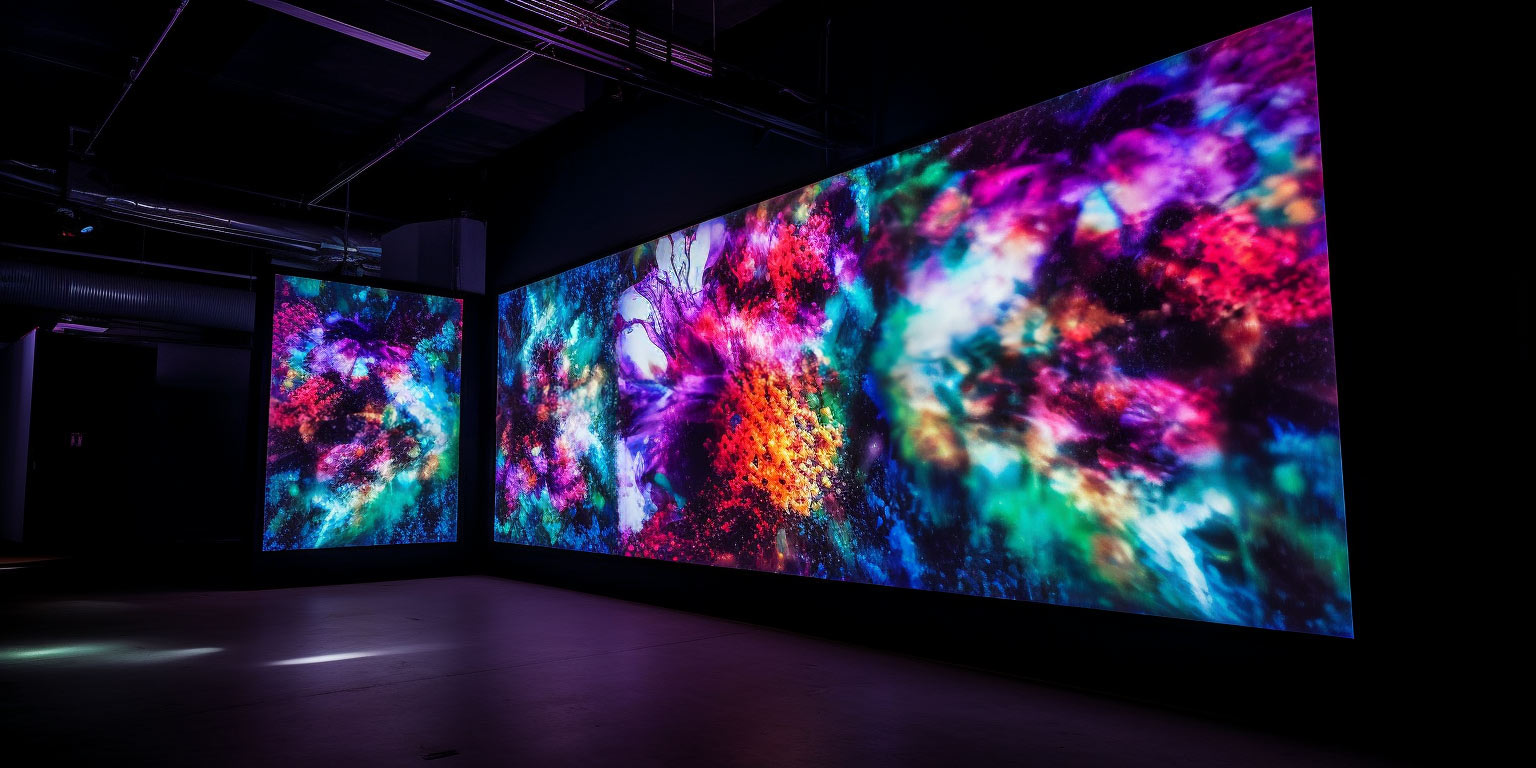
Understanding LED Video Systems Thailand: Display Technology for Commercial Venues
LED video walls consist of modular panels tiled together to create seamless large-format displays. Unlike consumer televisions, commercial LED panels are designed for continuous operation — running 12-18 hours daily in demanding environments with varying ambient light, temperature fluctuations, and physical vibration from professional sound systems.
The fundamental specification is pixel pitch — the distance in millimeters between individual LED clusters. Smaller pixel pitch means higher resolution at closer viewing distances, but costs increase dramatically. A P2.5 panel (2.5mm pitch) costs roughly three times more per square meter than a P4 panel, while a P1.2 fine-pitch display can cost ten times more.
Pixel Pitch Selection by Venue Type
Selecting the correct pixel pitch depends primarily on minimum viewing distance — how close audiences will stand to the display. The general rule: minimum viewing distance in meters equals pixel pitch in millimeters. A P3 display looks sharp from 3 meters away; closer than that and individual pixels become visible.
Nightclubs and bars (P2.5–P4): Audiences typically view displays from 3-8 meters. P3 or P4 provides excellent visual impact for DJ booth backdrops and dance floor displays. The ambient darkness of club environments means lower brightness requirements — 800-1200 nits is sufficient, compared to 5000+ nits for outdoor installations.
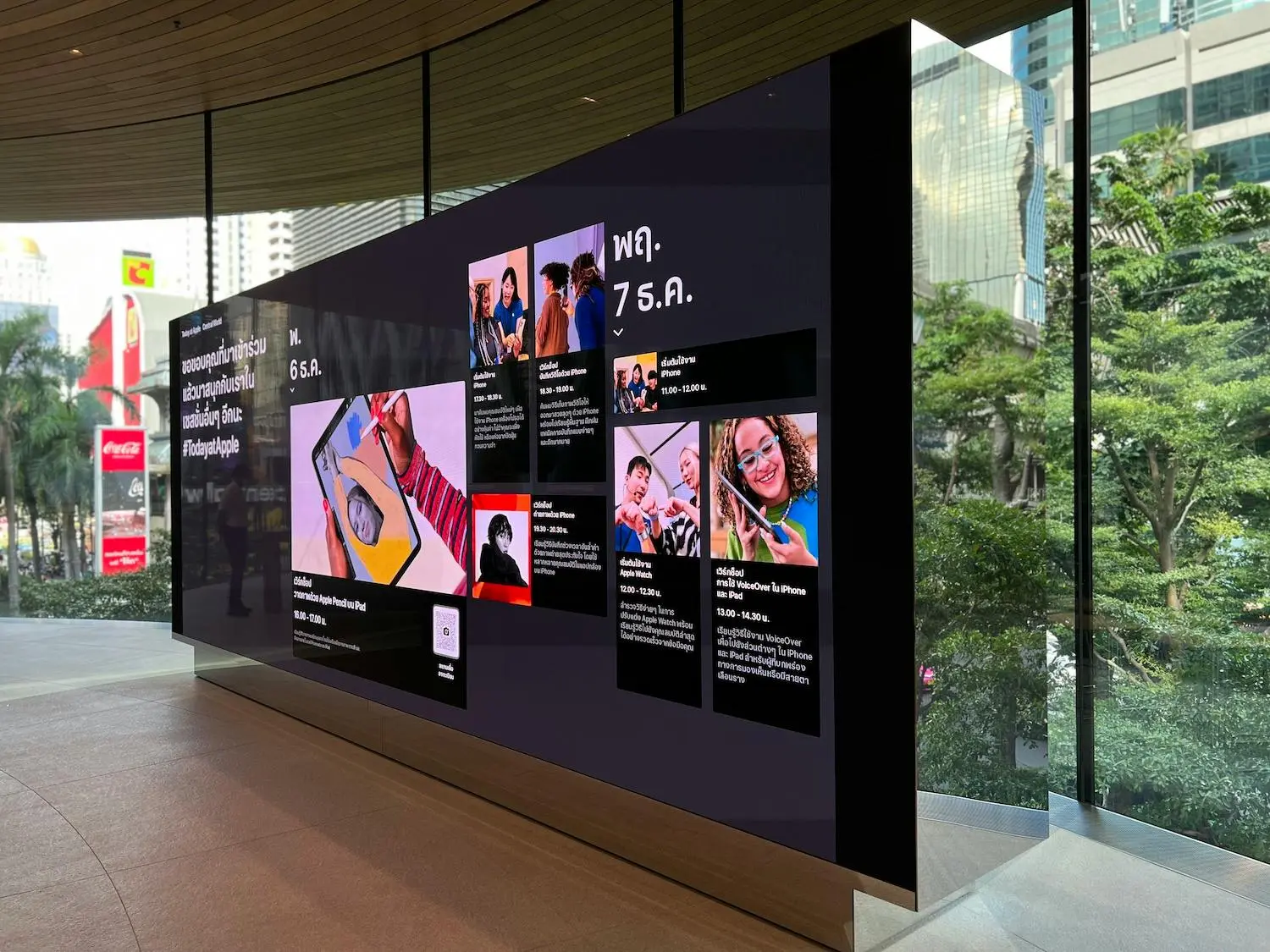
Hotel lobbies and restaurants (P1.5–P2.5): Guests view displays from closer distances — often 2-4 meters in lobbies and less in intimate restaurant settings. P2 or P1.5 provides the fine detail needed for brand content, menu displays, and ambient video art. Higher resolution also supports text legibility at close range.
Conference rooms and meeting spaces (P1.2–P1.8): Participants sit 2-6 meters from displays and need to read detailed presentations, spreadsheets, and video calls. Fine-pitch P1.2 or P1.5 LED walls are increasingly replacing traditional projectors, offering superior brightness, contrast, and maintenance-free operation.
Outdoor installations and facades (P4–P10): Viewing distances exceed 5 meters, often 10-20+ meters for building facades. P6 or P8 provides excellent visibility at these distances while dramatically reducing cost per square meter. Outdoor panels require IP65-rated weatherproofing, high brightness (5000-8000 nits), and robust thermal management for Thailand’s tropical climate. Clubtek works with Arena Lux, our own LED screen brand manufactured in-house, to deliver commercial-grade panels matched to each venue’s requirements.
Video Projection: When Projectors Outperform LED
LED walls dominate most permanent installations, but projection technology maintains critical advantages in specific applications. Projection mapping transforms irregular surfaces — curved walls, architectural elements, building facades — into dynamic canvases that LED panels cannot follow. Laser projectors now deliver 20,000-40,000 lumens with minimal maintenance, making them viable for semi-permanent venue installations.
Projection mapping for venue entrances and VIP areas creates dramatic first impressions without the physical presence of display hardware. Content wraps around columns, flows across ceilings, and transforms bare walls into immersive environments — something flat LED panels cannot achieve.
Large-format projection for events and temporary setups offers flexibility that permanent LED walls lack. A single high-output projector can create a 10-meter-wide image that would require hundreds of LED panels to replicate. For venues hosting varied events — weddings, corporate presentations, concerts — projection provides adaptability at lower capital cost.
The critical limitation: ambient light. Projection requires controlled lighting environments. In venues where house lights remain active — restaurants, hotel lobbies, outdoor spaces — LED displays deliver significantly better visibility and contrast.
Integration with Sound and Lighting Systems
Video systems rarely operate in isolation. Professional LED video systems Thailand installations integrate LED walls and projection with audio and lighting through unified control systems. This integration creates synchronized experiences — lighting that responds to video content, audio-reactive visuals on LED walls, and seamless content transitions across multiple display surfaces.
The backbone of professional integration is media server technology. Dedicated media servers process video content, manage multiple output feeds, and synchronize playback with DMX lighting control and audio triggers. Systems like Resolume, Disguise, and Pixera handle real-time content manipulation across complex multi-display configurations.
DMX integration allows video content to drive lighting scenes — LED walls displaying warm tones trigger complementary warm lighting states, transitions in video content synchronize with lighting changes, and DJ-triggered effects cascade across both video and lighting simultaneously. Without this integration, venues create disjointed experiences where video and lighting operate independently.
Audio-visual synchronization becomes critical in nightclub and entertainment environments. Modern AV controllers analyze audio frequency content in real-time, generating visual responses on LED walls that match musical energy — bass drops trigger visual impacts, builds create crescendoing visual intensity, and breakdowns shift to ambient visual modes.
Indoor vs. Outdoor: Critical Differences for LED Video Systems Thailand Climate
Thailand’s tropical climate introduces specific challenges that temperate-climate installation practices don’t address. Outdoor LED installations face sustained temperatures exceeding 40°C, humidity above 80%, monsoon rainfall, and intense UV exposure. Indoor installations in non-air-conditioned spaces — open-air restaurants, covered patios, warehouse-style venues — face similar environmental stress.
IP rating requirements: Outdoor installations require minimum IP65 protection — complete dust protection and resistance to water jets from any direction. Semi-outdoor installations under cover but exposed to wind-driven rain need minimum IP54. Indoor installations in climate-controlled environments can use standard IP20 panels, significantly reducing cost.
Brightness and contrast: Direct sunlight in Thailand reaches 80,000-100,000 lux. Outdoor LED displays need 5,000-8,000 nits minimum to remain visible. Even north-facing installations or covered outdoor areas require 2,500-4,000 nits. Indoor displays in darkened venues (nightclubs, cinemas) need only 800-1,200 nits — lower brightness reduces power consumption and extends LED lifespan.
Thermal management: LED panels generate significant heat during operation. In Thailand’s ambient temperatures, cooling systems must handle both internal heat generation and external thermal load. Outdoor installations require forced-air cooling or even active cooling systems. Poor thermal design causes premature LED degradation, color shifting, and panel failure — problems that may not appear for months but become irreversible.
Common Mistakes in LED and Video Installations
The most frequent error is buying on price per square meter without understanding pixel pitch requirements. A P5 display purchased because it was 60% cheaper than P2.5 looks terrible in a hotel lobby where guests stand 2 meters away. The savings evaporate when the display must be replaced.
Ignoring structural requirements causes expensive retrofits. LED walls are heavy — a 3×2 meter P2.5 indoor wall weighs 150-200kg. Mounting requires structural steel, proper load calculations, and often building modifications. Projects that budget for panels but not structure regularly exceed timelines and costs.
Inadequate content strategy wastes display investment. A stunning LED wall displaying a static logo provides minimal return. Professional installations include content management systems (CMS) enabling scheduled content rotation, live feed integration, and remote management. Without a content strategy, even premium displays become expensive wallpaper.
Neglecting signal infrastructure creates operational headaches. LED walls require high-bandwidth video signals — 4K content over distances exceeding 10 meters needs fiber-optic or HDBaseT transmission, not consumer HDMI cables. Professional installations plan signal routing during design, not as an afterthought.
Choosing rental-grade equipment for permanent installations compromises reliability. Event rental LED panels are designed for temporary use — they prioritize quick setup over long-term reliability. Permanent installations require commercial-grade panels rated for 50,000-100,000 hours of continuous operation with proper warranty support.
Why Professional LED Video Systems Thailand Installations Need Expert Design
LED and video system installation demands precision that general contractors and electricians are not equipped to deliver. Panel calibration alone — matching brightness, color temperature, and gamma across dozens or hundreds of individual panels — requires specialized equipment and expertise. Without proper calibration, seams between panels become visible, color varies across the display surface, and the installation looks amateurish regardless of panel quality.
Professional AV integrators handle the complete installation chain: structural engineering for mounting systems, electrical infrastructure for power distribution, signal routing for content delivery, control system programming for operational automation, and post-installation calibration ensuring visual consistency.
At Clubtek, our engineering team has delivered LED and video installations across Thailand’s most demanding venue environments — from beachfront clubs in Phuket exposed to salt air and monsoon weather, to high-end hotel lobbies requiring pixel-perfect visual presentation. Every installation begins with detailed site assessment, viewing distance analysis, and integration planning before a single panel is mounted. We integrate video with sound and lighting for complete AV solutions.
Conclusion
LED and video technology transforms commercial venues from static spaces into dynamic, immersive environments. The technology continues advancing rapidly — pixel pitches shrink, brightness increases, costs decrease, and integration capabilities expand. But technology alone doesn’t create impact. Proper specification, professional installation, and thoughtful integration with audio and lighting systems determine whether a video installation becomes a venue’s defining feature or an expensive disappointment.
For venue operators evaluating LED video systems Thailand-wide, the investment in professional consultation pays for itself by preventing specification errors, ensuring proper integration, and delivering installations that operate reliably for years. Book a free consultation with our engineering team to discuss your venue’s video requirements.
For corporate and meeting-room video applications, see our conference room AV installation guide. For the commercial service overview, visit Clubtek’s video systems service page.
Related coverage
For Pattaya’s LED-heavy entertainment venues, see our guide on Pattaya AV installation.