Professional audio systems for hotels, resorts, nightclubs, and entertainment venues. Distributed audio, concert-grade equipment, and multi-zone control from 50 to 2,000+ capacity
Unified control systems integrating audio, video, lighting and building management through professional automation platforms for hotels and restaurants.
How Much Does a Nightclub Sound System Cost in Thailand? 2026 Pricing Guide
TL;DR — Nightclub Sound System Cost Ranges in Thailand (2026)
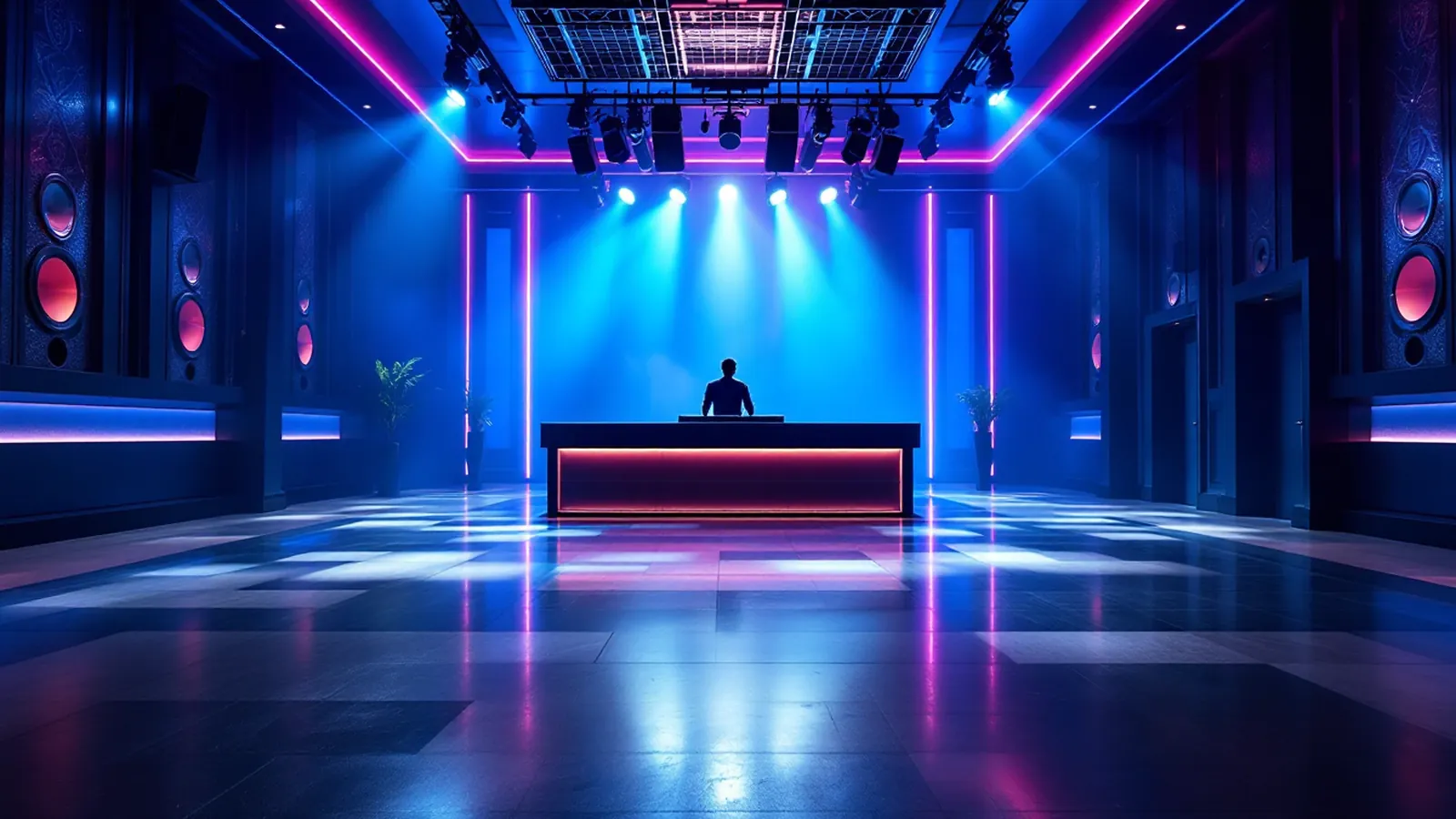
Modern Thai nightclub interior pre-opening — typical layout for a Tier 2 (300–500 capacity) install.
A professional nightclub sound system in Thailand costs between 500,000 THB and 8,000,000+ THB, depending on venue capacity, ceiling height, indoor or outdoor exposure, and whether the system includes integrated lighting and video. Most independent clubs in Phuket, Samui, Bangkok, and Pattaya land in three pricing tiers:
Small venues (100–200 capacity): 500,000–1,200,000 THB
What Determines the Cost of a Nightclub Sound System
Five factors drive 80% of the price variance between quotes:
1. Venue capacity and volume (cubic meters, not just square meters). A 300-capacity club with a 4-meter ceiling needs roughly twice the SPL output of the same footprint with a 2.8-meter ceiling. Sound pressure level requirements scale with room volume, not floor area.
2. Single-zone vs multi-zone design. A main dance floor plus VIP lounge plus smoking terrace plus restroom corridor is four zones, each requiring independent DSP control. Multi-zone systems cost 40–80% more than single-zone but allow simultaneous independent programming — dance music on the floor, lounge music in VIP, ambient on the terrace.
3. Indoor, outdoor, or hybrid. Outdoor and semi-outdoor venues (rooftop bars, beach clubs, open-air sections) require IP65–IP67 marine-grade speakers, corrosion-resistant mounting hardware, and weather-rated cabling. Outdoor zones cost 25–40% more per square meter than indoor zones in Thailand’s coastal climate.
4. Brand tier. Authorized professional brands like D&B Audiotechnik, Martin Audio, Adamson, Meyer Sound, and Electro-Voice command 2–4x the price of generic alternatives but deliver predictable SPL, even coverage, 10+ year service life, and access to spare parts and warranty support across Asia.
5. Integration scope. Audio-only is the baseline. Audio plus DMX lighting plus LED video plus unified DJ booth control plus building automation can double or triple the install scope. Most modern nightclub builds in Thailand now bundle audio + lighting + video into a single integrated quote.
Pricing Tier 1: Small Venues (100–200 Capacity) — 500,000 to 1,200,000 THB
Typical fit: cocktail bars with dance areas, small late-night lounges, boutique club rooms inside hotels, beach bar dance zones.
What’s included at this tier:
– 4–6 main loudspeakers (point-source, two-way) covering one zone
– 2 subwoofers for low-frequency reinforcement
– 1 multi-channel Class-D amplifier with onboard DSP
– DJ booth monitor pair
– Basic input plate (XLR, RCA, USB) for DJ equipment
– Cabling, mounting, basic acoustic checks
– Commissioning, training, 12-month warranty
Brand examples at this tier: Electro-Voice ZLX or ELX series, JBL PRX series, Yamaha DZR, RCF ART series. All Thailand-authorized with local warranty fulfillment.
Hidden costs to budget separately:
– Electrical work (dedicated 32A circuits): 30,000–80,000 THB
– Acoustic treatment (panels, bass traps for room with hard surfaces): 50,000–150,000 THB
– Structural mounting (overhead rigging certification): 20,000–60,000 THB
A 150-capacity rooftop bar in Patong with a covered dance area would typically land at 700,000–950,000 THB fully installed, including outdoor-rated speakers for the open section.
Typical fit: dedicated nightclubs with multiple zones, beach clubs with full dance programming, hotel club venues, established Phuket and Samui clubs.
What’s included at this tier:
– Main dance floor: 4-element line array per side OR 6–8 point-source speakers in distributed array
– 4–6 dedicated subwoofers (cardioid or front-loaded configurations for directional bass)
– Dedicated VIP zone with independent 2-zone audio
– DJ booth: full monitor system with sidefills
– Digital mixing console (Allen & Heath SQ, Yamaha QL, Soundcraft Si series)
– Multi-zone DSP processor with venue presets
– Wired delay lines for back-of-room coverage
– Full cable management with patch panels
– Acoustic design with computer modeling
– Three-day commissioning and tuning by certified technician
Brand examples at this tier: Martin Audio MLA Mini or CDD series, D&B Audiotechnik T-Series, JBL VRX, Electro-Voice X-Line Compact.
A real-world reference point: A 350-capacity nightclub in Pattaya with main floor, VIP zone, and outdoor smoking terrace typically lands at 2,200,000–2,800,000 THB. Add LED wall and DMX lighting integration and the project moves to 3,500,000–4,500,000 THB.
Pricing Tier 3: Large Clubs and Superclubs (500+ Capacity) — 3,500,000 to 8,000,000+ THB
Typical fit: flagship nightclubs in Bangkok and Pattaya, large resort club venues, multi-floor entertainment complexes, festival-grade beach club stages.
What’s included at this tier:
– Full line array systems (8–12 elements per side, hung from certified rigging)
– 8–16 dedicated subwoofers in cardioid or end-fire array configurations
– Distributed delay systems for uniform SPL coverage front to back
– 3–5 independent audio zones with cross-zone routing
– Full digital infrastructure (Dante, AVB, or AES67 network)
– Redundant amplifier configurations (N+1 backup)
– DJ booth with full studio-grade monitoring and recording outputs
– Acoustic engineering with EASE or Soundvision modeling
– Custom rigging design and structural engineering reports
– One-week commissioning by manufacturer-certified team
– 3-year extended warranty and SLA service contract
Brand examples at this tier: D&B Audiotechnik V-Series or KSL, Martin Audio MLA, Adamson E-Series or S-Series, Meyer Sound LEOPARD or LYON, L-Acoustics K2 (when import logistics allow).
Real-world cost reference: A 700-capacity superclub with main dance floor, VIP balcony, outdoor terrace, full LED integration, DMX lighting, and integrated DJ booth typically lands at 5,500,000–7,500,000 THB. Adding flagship line array brands like D&B V-Series pushes total project cost above 8,000,000 THB.
Hidden Costs Most Quotes Don’t Mention
Equipment-and-labor quotes routinely understate total project cost by 20–35%. The most commonly missed line items:
Electrical infrastructure upgrade. Most existing venues in Thailand have insufficient circuit capacity for modern Class-D amplifier loads. Dedicated 32A or 63A circuits with isolated grounding cost 50,000–250,000 THB depending on distance to the main panel.
Acoustic treatment. Concrete-walled venues common in Thailand are acoustic disasters out of the box. Proper panel treatment, bass traps, and ceiling diffusion add 100,000–500,000 THB but are non-negotiable for intelligibility.
Structural rigging certification. Hanging line arrays from existing structures requires engineering review and certified rigging hardware. Budget 80,000–300,000 THB.
Climate protection. Coastal venues in Phuket and Samui require corrosion-resistant mounting hardware, sealed cable conduits, and IP-rated speakers in semi-outdoor zones — adding 15–25% to relevant zones.
Cable runs and patch infrastructure. Long cable runs in finished venues require fishing through walls, ceiling access, and patch panel termination. Budget 30,000–150,000 THB depending on venue complexity.
Permits and noise compliance. Larger venues require acoustic surveys to demonstrate compliance with neighborhood sound limits. Budget 20,000–80,000 THB.
Why “Cheap” Nightclub Sound Systems Fail in Thailand
Three structural reasons low-bid installations fail within 12–24 months:
1. Thailand’s electrical environment is hostile. Brownouts, voltage spikes, and inconsistent grounding destroy amplifiers without protection. Cheap installs skip power conditioning and isolation transformers, which save 60,000–150,000 THB up front and cost 300,000+ THB in replacement amps later.
2. The coastal climate corrodes everything. Salt air, high humidity, and seasonal monsoon rain corrode connectors, speaker hardware, and amplifier components rapidly. Marine-grade hardware is 20–30% more expensive but lasts 5–10 years vs 12–18 months for indoor-rated equipment used outdoors.
3. Acoustic design is the actual product. A 200,000 THB speaker mounted incorrectly in a poorly treated room sounds worse than a 50,000 THB speaker designed and tuned properly. Equipment-only quotes that skip acoustic modeling, room measurement, and DSP tuning deliver bad sound regardless of brand prestige.
How to Evaluate Sound System Quotes
When comparing nightclub audio quotes in Thailand, ask each vendor for the following six items. Quotes missing any of these are not comparable to engineered system quotes:
Acoustic design document with room model, SPL coverage map, and frequency response targets
Specific brand and model numbers for every speaker, amplifier, and DSP — not generic descriptions
Authorized dealer documentation for warranty fulfillment
Detailed bill of materials with cable specifications, mounting hardware, and connectors
Commissioning and tuning timeline with named technician certifications
Post-install support contract with response time SLA
Red flags include: round-number lump sums without breakdown, brand names without model numbers, missing acoustic design, no commissioning timeline, and no warranty fulfillment path.
When Does a Nightclub Sound System Pay Back?
For a 250-capacity venue with a 2,500,000 THB sound system, the payback math typically looks like this in Thailand’s market:
Average cover or minimum spend per guest: 800–1,500 THB
Capacity utilization improvement from premium sound: 15–25% (verified across multiple Phuket installs)
Guest return rate improvement: 20–35%
Premium pricing power on tickets, table service, bottle service: 10–20%
Combined effect typically returns the sound system investment within 18–30 months, after which it becomes pure margin. Venues running cheap installs that need replacement at month 18 effectively pay twice — once for the failed system and once for the replacement — without ever achieving the revenue lift premium audio enables.
Frequently Asked Questions
How long does it take to install a nightclub sound system in Thailand?
For a mid-size nightclub (200–500 capacity), full installation including acoustic design, equipment delivery, mounting, cabling, and commissioning typically takes 3–5 weeks from contract signing. Large superclub installs run 6–10 weeks. Tier 1 small venue installs can complete in 2–3 weeks.
Can I use the same sound system for indoor and outdoor zones?
No. Indoor and outdoor zones require different speaker designs. Indoor speakers used outdoors fail within 6–12 months in Thailand’s climate. Properly integrated systems use IP65–IP67 marine-grade speakers in outdoor zones, controlled by the same central DSP and amplifier rack indoors.
What’s the difference between line array and point source for nightclubs?
Line array systems deliver more even SPL coverage over long throws (15+ meters) and are standard for clubs above 400 capacity. Point source systems are simpler, lower cost, and sufficient for venues under 250 capacity with shorter throw distances. Most mid-size clubs use distributed point source arrays. See our detailed comparison: Line Array vs Point Source Guide.
Do I need a separate DJ monitor system?
Yes. (See: wireless microphone licensing and NBTC frequency rules for Thailand.) Main house speakers face the dance floor and create severe phase issues for the DJ behind them. A dedicated 2-speaker booth monitor system with independent volume control is required for any professional venue. Budget 80,000–200,000 THB for booth monitoring.
Should I buy direct from manufacturers and hire local installers?
Direct purchase saves 10–20% on equipment but eliminates warranty path, removes acoustic design, and shifts liability for installation failures onto the venue owner. Most owners who do this re-hire engineered integrators within 24 months to fix the install. The cost savings rarely survive contact with reality.
What ongoing costs should I budget after install?
Annual service contracts for professional nightclub systems run 60,000–200,000 THB per year, including quarterly tuning, software updates, preventive maintenance, and priority response. Budget 8–10% of system cost annually for service. Replacement consumables (microphone capsules, cables, DJ booth components) add 30,000–100,000 THB annually depending on usage.
Do I need to budget for permits or noise compliance in Thailand?
Bangkok and major tourist areas (Phuket Patong, Pattaya Walking Street, Samui Chaweng) have noise ordinances enforced by local police. Acoustic compliance surveys cost 20,000–60,000 THB. Venues without proper sound containment can face complaints, fines, or operating restrictions. Quality installs include directional speaker design to limit sound bleed off-premises.
Get a Detailed Quote for Your Nightclub
Clubtek Thailand has engineered nightclub sound systems for 13+ years, with 100+ completed installations across Phuket, Samui, Phangan, Krabi, Pattaya, and Bangkok. We are authorized dealers for D&B Audiotechnik, Martin Audio, Electro-Voice, Adamson, Allen & Heath, JBL Pro, and Yamaha Pro.
Every project starts with a free on-site acoustic survey, followed by 3D visualization in Capture software showing you the exact equipment placement, SPL coverage, and lighting integration before you commit a single baht.
WhatsApp:+66 954 288 420 Phone: +66 954 288 420 Free site survey and detailed quote within 48 hours.